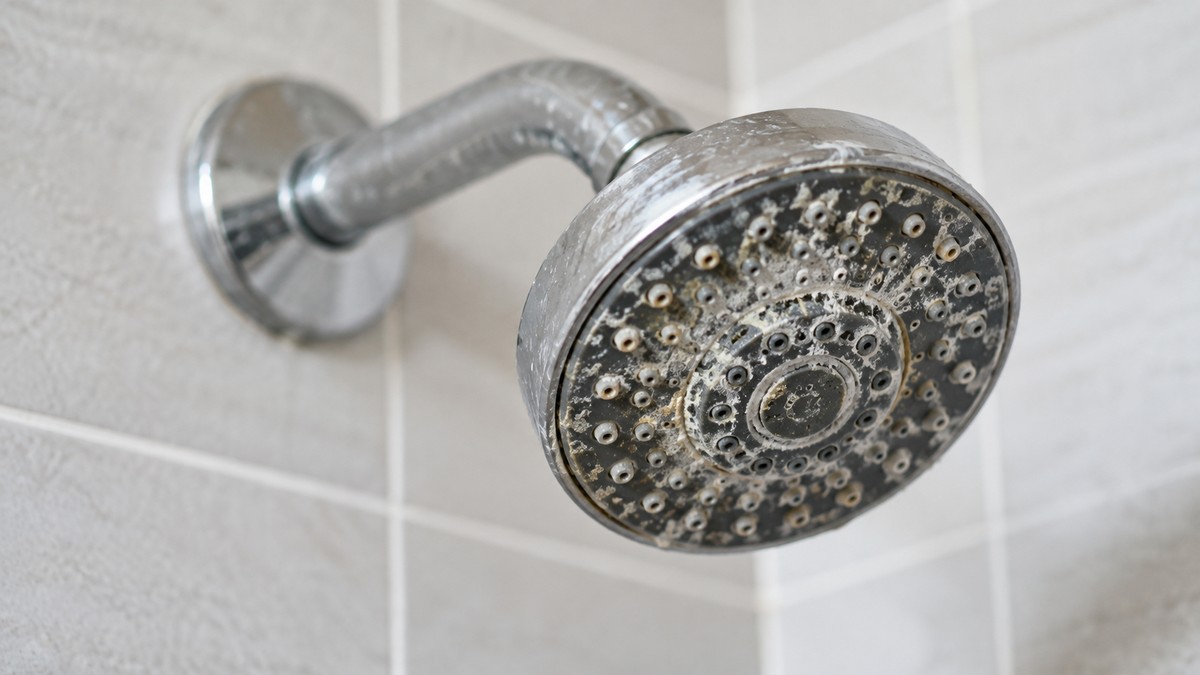
Why Shower Heads Get Mineral Buildup
As an Amazon Associate we earn from qualifying purchases.
Why shower heads get mineral buildup comes down to the water. Hard water carries dissolved calcium and magnesium, and those minerals stay behind as the water heats and dries. On a shower head, the most obvious sign in the sources is a whitish crust on the face and the ends of the head, and the holes can clog over time. This guide covers causes only. It draws on three university extension publications and a New Jersey state health guide, and it does not give cleaning steps.
Quick answer
- Hard water carries dissolved calcium and magnesium. When the water heats or dries, those minerals can be left behind as scale, according to the University of Nebraska-Lincoln Extension guide and the North Dakota State University publication.
- On a shower head, the North Dakota State University publication names a whitish buildup on the ends of the head. The New Jersey Department of Health guide says minerals can build up and block the nozzles.
- Scale inside pipes can reduce water flow and pressure, according to the Virginia Tech Extension publication. A weak shower is not always caused by the head alone.
- The sources do not say how fast buildup forms in a given home. Read the gaps section before you assume a timeline.
What minerals cause the buildup?
Water picks up minerals as it moves through the ground. The University of Nebraska-Lincoln Extension guide explains that water is called hard when it contains high amounts of dissolved calcium and magnesium. As water moves through soil and rock, it dissolves very small amounts of these minerals and holds them in solution. The Virginia Tech publication describes the same source: groundwater picks up calcium and magnesium ions when it contacts limestone and other rocks.
The North Dakota State University publication defines hardness as the combined amount of dissolved calcium, magnesium and iron in raw water. It also says iron is usually a very small part of that total compared with calcium and magnesium. For shower heads, calcium and magnesium are the minerals the sources name most often.
The Nebraska guide says the degree of hardness rises as the calcium and magnesium content rises. The sources do not give a hardness level at which a shower head starts to show buildup, so the crust alone does not tell you the level.
Why heat leaves minerals behind
Heat is the step where minerals come out of the water. The Nebraska guide says “Heated hard water forms a scale of calcium and magnesium minerals” that can reduce how well water-using appliances work. The North Dakota State University publication describes the process in water heaters: when water is heated, calcium carbonate and magnesium carbonate come out of the water and coat the heating elements. The same publication says the deposit also coats the inside of tanks in both electric and natural gas heaters.
Those sources describe heaters and appliances. None of the publications opened for this guide describes how heat from a shower changes scale on the head itself. The heater findings are the closest match, and they show the same minerals forming scale once the water is heated.
How the buildup shows up at the head
The clearest sign in the sources is on the outside of the head. The North Dakota State University publication says “A whitish buildup on the ends of faucets and shower heads is probably the most obvious result of hard water.” The New Jersey Department of Health guide says that “naturally occurring minerals can build up and block the nozzles (holes) through which water passes.”
Blocked holes change the spray. The sources do not describe the spray change in detail, and they do not give a count of blocked holes that counts as a problem. The table below sorts the signs by the cause each source names.
| What you notice | Cause the sources name | Source | How fast it forms |
|---|---|---|---|
| Whitish crust on the face and ends of the head | Calcium and magnesium left behind by hard water | North Dakota State University | Not stated |
| Holes blocked, spray changed | Naturally occurring minerals build up in the nozzles | New Jersey Department of Health | Not stated |
| Lower flow or pressure across the house | Mineral scale inside pipes | Virginia Tech Extension | Not stated |
| Film on glass doors, walls and tubs | Hard water film, and soap scum from soap combining with the minerals | North Dakota State University | Not stated |
| Water heater works less efficiently or wears out sooner | Scale on heating elements and tank walls | North Dakota State University; Virginia Tech Extension | Not stated |
If you are shopping for a replacement, the roundup of high-pressure heads that also save water is one place to compare options. The sources in this guide do not compare head designs, so the roundup is a separate question from buildup itself.
Where the minerals in your water come from
Most water delivered to homes from wells, rural water or municipal sources contains some hardness, according to the North Dakota State University publication. That publication says community supplies are monitored and treated for health-threatening impurities but may still have high hardness, and it recommends asking the supplier for the latest test results.
The University of Nebraska-Lincoln Extension guide says public water systems must provide annual water quality reports, and those reports may include hardness information. Public water suppliers are not required to manage hardness, according to the same guide. The Virginia Tech publication says private water sources such as wells and springs are not regulated by the EPA, and owners are responsible for monitoring their own water.
In short, the mineral source is the water supply itself. The sources in this guide do not say which supply a given home has, so check the utility report or a water test before you decide the cause.
Buildup beyond the shower head
Minerals are not the only residue in a shower. The Nebraska guide says soap curds can deposit on dishes, bathtubs and showers, and on all water and plumbing fixtures. The North Dakota State University publication adds that hard water causes films on glass shower doors, walls and bathtubs. It also says a scum forms when soap combines with dissolved calcium and magnesium, and that soap scum is difficult to remove from sinks and appliances.
The sources describe these residues separately from the head. They do not say which one appears first in a given shower, or how the head compares with the walls and the door. If your main complaint is a film on the glass, the sources point to hard water as the common cause. They do not identify the shower head as the source of that film.
Why buildup matters beyond appearance
The Virginia Tech publication says “While consuming hard water does not present a health risk, it may cause aesthetic or nuisance problems” such as mineral deposits on plumbing fixtures. The Nebraska guide says hard water is not a health hazard and calls the buildup on plumbing fixtures a nuisance. Neither source treats buildup on a shower head as a health finding.
The Nebraska guide adds a practical point: pipes can become clogged with scale that reduces water flow, and in some cases the pipe must be replaced. The Virginia Tech publication links hard water to lower heater efficiency and a shorter heater life. The North Dakota State University publication says a large buildup in a heater slows the heating process and requires more energy to heat water.
The New Jersey guide raises a different reason to keep a shower head clean. It says cleaning reduces the amount of harmful waterborne bacteria, including Legionella, on the shower head. That guide is about cleaning, and this page does not repeat its steps. The guide does not give a cleaning schedule.
For a handheld option, the roundup of water-efficient handheld heads is a separate place to look once you know the water is the issue. A handheld head does not change the minerals in the water, and the sources do not say it does.
Can the buildup tell you how hard the water is?
Buildup is a sign, not a measurement. The sources agree that hard water causes the signs above, but they do not say a particular crust level equals a particular hardness number. The Virginia Tech publication says test results are usually reported in grains per gallon or in milligrams per liter of calcium carbonate.
The North Dakota State University table places 121 to 180 milligrams per liter in its hard class, which it gives as 7.0 to 10.5 grains per gallon. The same table puts 17 milligrams per liter at the top of the soft class. A water test gives the number, and the buildup alone does not.
How we chose
This guide answers one question: why shower heads get mineral buildup. We chose sources by three tests. First, the publisher had to be a university extension service or a state health agency. Second, the page had to state a cause of hard water deposits in plain text. Third, we left out claims about products, treatments and benefits, because this guide is about causes. We opened each page with curl on 2026-10-21 and read the saved text.
We used four publications: the North Dakota State University water softening publication (opened as a web page and as a PDF and counted once, because it is one publication), the University of Nebraska-Lincoln Extension hard water guide, the Virginia Tech Extension hardness publication, and the New Jersey Department of Health shower head guidance. That makes four sources in total. The guide does not rank products and does not name a best option.
What we could not verify: what the sources do not say
- How long buildup takes to form, or how much deposit blocks a head. None of the sources gives a time or an amount.
- A cleaning schedule. The New Jersey guidance gives none, and this guide gives no cleaning steps.
- Whether heat from a shower changes scale on the head. The sources describe water heaters and appliances, not the head.
- Other causes of blocked holes. The sources name mineral scale and do not list other causes of a clogged head.
- Whether a different head design resists buildup better. The sources do not compare designs.
Frequently asked questions
Why does my shower head have white crust?
The North Dakota State University publication says a whitish buildup on the ends of faucets and shower heads is probably the most obvious result of hard water. The Nebraska guide says calcium and magnesium are the two most common minerals that make water hard. A white crust is a sign to test the water, not proof of a specific hardness level.
Is mineral buildup on a shower head a health risk?
The sources do not describe the buildup itself as a health risk. The Virginia Tech publication says consuming hard water does not present a health risk, and the Nebraska guide says hard water is not a health hazard. The New Jersey guidance raises a separate concern about bacteria, including Legionella, on the head, and says cleaning reduces them.
Can a new shower head build up minerals?
The sources do not say how quickly a new head builds up. They describe the minerals in the water, not the head design. Because they do not compare head designs, they also do not say whether one design resists buildup better than another. If you are comparing new heads, the sliding shower head roundup and the dual shower head with slide bar roundup cover two common designs as separate starting points.
Does a water softener stop mineral buildup?
The Nebraska guide says ion exchange softening units can effectively reduce water hardness. The North Dakota State University publication says standard water softeners remove nearly all hardness from water. The same publication says softening adds sodium, at about 8 milligrams for each grain of hardness removed. The sources do not give a reduction figure for buildup on a shower head.
Does a magnetic device stop the buildup?
The sources do not show that it does. The Virginia Tech publication says the hardness of water is not changed by the devices that claim to manage scale with magnetic or electrical technology. The North Dakota State University publication says several research reports found no change in the calcium ion concentration of water treated with such devices.
Does hard water affect water heaters?
Yes, according to the sources. The Virginia Tech publication says hard water can reduce the efficiency and life span of water heaters. The North Dakota State University publication says water heaters with large accumulations of mineral buildup have shorter life spans, and that the heating process slows as the buildup grows.
Bottom line
If you see a whitish crust on a shower head, treat it as a sign of hard water minerals. Test the water before you choose a fix. The sources do not describe a head change fixing scale in pipes or a water heater, so do not expect one to.
Sources
North Dakota State University Extension, “Water Softening (Ion Exchange),” WQ1031, revised May 2022. Web page: https://www.ndsu.edu/agriculture/extension/publications/water-softening-ion-exchange (opened 2026-10-21). PDF: https://www.ndsu.edu/agriculture/sites/default/files/2022-05/wq1031.pdf (opened 2026-10-21).
University of Nebraska-Lincoln Extension, “Drinking Water: Hard Water (Calcium and Magnesium),” G1274, revised May 2016. https://extensionpubs.unl.edu/publication/g1274/na/html/view (opened 2026-10-21).
Virginia Tech Extension, “Virginia Household Water Quality Program: Hardness in Household Water,” publication 442-664. https://www.pubs.ext.vt.edu/442/442-664/442-664.html (opened 2026-10-21).
New Jersey Department of Health, “Guidance for Removing and Cleaning a Shower Head.” https://nj.gov/health/cd/documents/topics/legion/ShowerHead_Cleaning_Guidance.pdf (opened 2026-10-21).