How to Tell If Your Water Is Hard
As an Amazon Associate we earn from qualifying purchases.
How to tell if your water is hard starts with three checks. First, look at the signs in your home. Second, if you are on public water, check the utility’s annual report. Third, if the report does not give a number, or you use a private well, test the water and read the result against a hardness table. The signs point toward hard water, but only a test gives a number. The sources treat hard water as a nuisance for fixtures, soap and appliances, not as a health hazard.
Quick answer
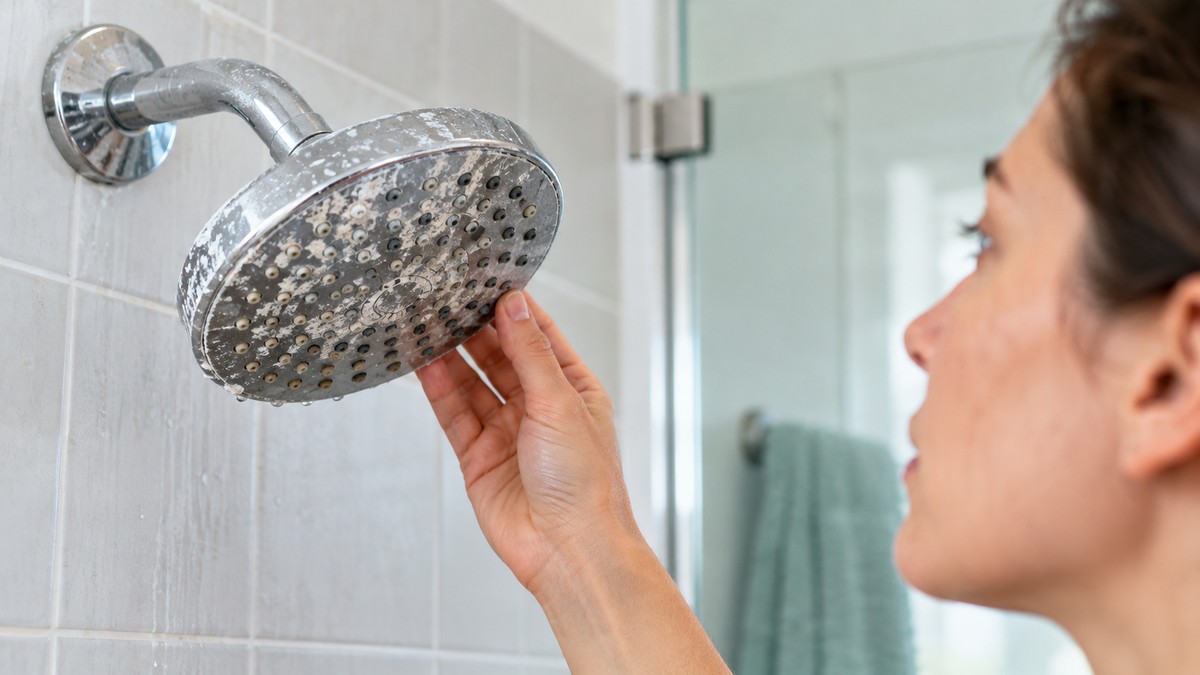
- Start with the signs. The North Dakota State University publication links whitish buildup on faucets and shower heads, films on glass shower doors and soap scum to hard water.
- On public water, the annual water quality report may list hardness. If it does not, the sources say to ask the supplier.
- On a private well, a laboratory gives the most accurate result. Home test kits and dip strips give a good estimate, according to the University of Nebraska-Lincoln Extension guide.
- Read the number against the North Dakota State University table in mg/l or ppm, or in grains per gallon. One grain per gallon equals 17 ppm.
Start with the signs in your home
Hard water leaves marks that you can see and feel. The North Dakota State University publication says a whitish buildup on the ends of faucets and shower heads is probably the most obvious result. It also lists films on glass shower doors, walls and bathtubs, and a scum that forms when soap combines with dissolved calcium and magnesium. The same publication links dull or sticky hair and a rough feel after showering to hard water.
The Nebraska guide explains the soap side of the problem. Soap used in hard water combines with the minerals to form a sticky soap curd, and some synthetic detergents work less well in hard water. The Virginia Tech publication describes the same pattern as reduced sudsing and cleaning action of soaps and detergents, along with soap scum on plumbing fixtures.
These signs are useful for deciding whether to test, but they do not give a number. The sources do not say how to tell hard-water deposits from other deposits, so the test is the step that confirms the cause.
| Sign at home | What the sources link it to | Gives a hardness number? |
|---|---|---|
| Whitish buildup on faucets and shower heads | Hard water (North Dakota State University) | No |
| Film on glass shower doors, walls and bathtubs | Hard water (North Dakota State University) | No |
| Soap scum or sticky soap curd | Soap combining with calcium and magnesium (Nebraska; North Dakota State University) | No |
| Less lather and weaker cleaning from soap and detergent | Hard water reducing soap performance (Nebraska; Virginia Tech) | No |
| Scale in a water heater or on appliances | Heated hard water (Nebraska; North Dakota State University; Virginia Tech) | No |
| Dull or sticky hair, rough feel after showering | Hard water (North Dakota State University) | No |
If you are on public water, check the annual report
Public water system operators must provide an annual water quality report, which the Nebraska guide calls a consumer confidence report. That report may include information about the hardness level of the water delivered. The North Dakota State University publication recommends asking the supplier for the latest test results if the report is unclear.
The report may not help, though. The Nebraska guide says public water suppliers are not required to manage hardness, and that there is no primary or secondary drinking water standard for hardness. The Virginia Tech publication says there are no EPA public drinking water standards for hard water. So a report can be accurate and still say nothing about hardness.
If the report lists hardness, you have a number without a test. If it does not, call the supplier and ask for the hardness result. The sources do not give a response time for that request.
If you use a private well, or the report has no number, test
Private supplies are a different case. The North Dakota State University publication says that on a private supply, water testing is the owner’s responsibility, and that testing should be done on a regular basis. It adds that a test should be done more often if a problem is suspected. The Virginia Tech publication says a qualified laboratory can analyze hardness, and that its program keeps a list of certified laboratories.
The Nebraska guide describes the choices. Laboratories offer hardness tests, and test kits and dip strips are sold for home use. Kits are generally easy to use and can give a good estimate of hardness. Laboratory tests should be used when more accurate measurements are needed. The same guide warns that companies that sell water treatment equipment also offer hardness tests, and that a buyer should understand what the test measures and what water it measures.
The North Dakota State University publication adds that a water test should come before any water treatment equipment is bought. It says the test shows what impurities are present, including other dissolved minerals that may need separate treatment.
Read the result with the North Dakota State University table
Hardness is reported in two common units. Grains per gallon (gpg) is one, and milligrams per liter (mg/l) or parts per million (ppm) is the other. The North Dakota State University publication says one gpg equals 17 ppm or 17 mg/l, and that one ppm is generally considered equal to one mg/l. The table below uses that publication’s classes, which are based on hardness as calcium carbonate.
| Hardness class | mg/l or ppm | Grains per gallon (gpg) |
|---|---|---|
| Soft | Less than 17 | Below 1.0 |
| Slightly hard | 17-60 | 1.0 to 3.5 |
| Moderately hard | 61-120 | 3.5 to 7.0 |
| Hard | 121-180 | 7.0 to 10.5 |
| Very hard | More than 180 | Above 10.5 |
This page uses the North Dakota State University table only. Other publications list hardness classes too, and this page does not use them. The table is the one scale the sources in this guide share.
The North Dakota State University publication also reports a consumer threshold. It says that, according to NSF International, consumers believe they have a problem when hardness surpasses the 6 to 7 grain per gallon level. That is a statement about consumer belief, not a treatment rule. The Virginia Tech publication says treatment is only necessary when the hardness level is causing a problem for the homeowner.
What a result does and does not tell you
A hardness number tells you how much calcium and magnesium the water carries. It does not tell you how a fixture, a heater or a device will behave. The Nebraska guide says hardness can be approximated with a home-use test kit or measured more accurately with laboratory analysis, and it says the choice depends on how precise the answer must be.
A result also does not show whether a treatment device works. The Virginia Tech publication says that no recognized agency in the United States has established protocol to assess the effectiveness of physical water treatment devices. The number and the device question are separate, and this guide does not answer the device question.
Common misreadings and what the sources say
| Mistake | What the sources say |
|---|---|
| Treating the utility report as proof of a hardness number | The report may include hardness, but suppliers are not required to manage it, and the Nebraska guide says there is no standard for hardness. |
| Mixing grains per gallon with mg/l | One grain per gallon equals 17 ppm or 17 mg/l, according to the North Dakota State University publication. |
| Assuming a kit is as exact as a laboratory | The Nebraska guide says a kit gives a good estimate and a laboratory gives more accurate measurements. |
| Trusting a seller’s test without asking what it measures | The Nebraska guide says the buyer should understand the nature of the test and the water being measured. |
| Testing only after a problem appears | The North Dakota State University publication says testing should be done on a regular basis, and more often if a problem is suspected. |
For the head itself, compare designs in the high-pressure and water-saving roundup, the water-efficient handheld roundup, the sliding shower head roundup or the dual shower head with slide bar roundup. This guide does not cover how any head performs with hard water, so use the test result for the water question and the roundups for the head question.
How we chose
This guide answers one question: how to tell if your water is hard. We chose sources by three tests. First, the publisher had to be a university extension service. Second, the page had to explain hardness measurement, testing or the signs of hard water in plain text. Third, we left out claims about products and treatment benefits, because this guide is about detection. We opened each page with curl on 2026-10-21 and read the saved text.
We used three publications: the North Dakota State University water softening publication (opened as a web page and as a PDF and counted once, because it is one publication), the University of Nebraska-Lincoln Extension hard water guide, and the Virginia Tech Extension hardness publication. That makes three sources in total. The guide does not rank products and does not name a best option.
What we could not verify: what the sources do not say
- The hardness classes in other publications. This page uses the North Dakota State University table only, so other class lists are not checked here.
- How accurate home test kits are. The sources call them a good estimate and give no accuracy figure.
- How to collect a water sample for a kit or a laboratory. The sources do not give sampling steps.
- A hardness level that calls for treatment in a given home. The Virginia Tech publication says treatment is needed only when hardness causes a problem, and it gives no number.
- How much hardness changes across a year or between taps. The sources do not say.
- Whether the signs prove hard water. The sources link the signs to hard water and do not say they are proof.
Frequently asked questions
Can I tell if my water is hard by looking at it?
Not with a number. The North Dakota State University publication says a whitish buildup on faucets and shower heads is probably the most obvious sign of hard water. Films on glass and scum from soap are other signs. The signs are a reason to test, but they do not give a hardness level.
Is a home test strip accurate enough?
The Nebraska guide says home-use kits and dip strips give a good estimate of hardness. If you need a more accurate measurement, the same guide says a laboratory test should be used. The sources do not give an accuracy figure for kits.
Where do I find hardness on my water report?
The annual water quality report may include the hardness level. The Nebraska guide says the report may include that information, and the North Dakota State University publication recommends asking the supplier for the latest test results. If the report has no hardness line, the sources say to ask the supplier directly.
What number counts as hard water?
In the North Dakota State University table, hard water falls between 121 and 180 mg/l, which is 7.0 to 10.5 grains per gallon. Water above 180 mg/l is very hard. The same publication reports that consumers believe they have a problem above the 6 to 7 grain per gallon level.
Is hard water a health problem?
The sources say it is not a health risk. The Nebraska guide says hard water is not a health hazard, and the Virginia Tech publication says consuming hard water does not present a health risk. The problems the sources describe are nuisance and appliance problems.
What do I do if my result is in the hard range?
The sources do not give a single answer. The Virginia Tech publication says treatment is needed only when hardness causes a problem for the homeowner. The North Dakota State University publication says the test results will help decide whether softening is needed, and that a water test may show other minerals that need separate treatment.
Bottom line
Use a number, not a sign, before you decide anything about hard water. Start with the utility report or a test, read the result on the North Dakota State University table, and decide only after you have the number in hand.
Sources
North Dakota State University Extension, “Water Softening (Ion Exchange),” WQ1031, revised May 2022. Web page: https://www.ndsu.edu/agriculture/extension/publications/water-softening-ion-exchange (opened 2026-10-21). PDF: https://www.ndsu.edu/agriculture/sites/default/files/2022-05/wq1031.pdf (opened 2026-10-21).
University of Nebraska-Lincoln Extension, “Drinking Water: Hard Water (Calcium and Magnesium),” G1274, revised May 2016. https://extensionpubs.unl.edu/publication/g1274/na/html/view (opened 2026-10-21).
Virginia Tech Extension, “Virginia Household Water Quality Program: Hardness in Household Water,” publication 442-664. https://www.pubs.ext.vt.edu/442/442-664/442-664.html (opened 2026-10-21).