best-magichome-filtered-shower-head-w
As an Amazon Associate we earn from qualifying purchases.
If you are looking at a best magichome filtered shower head, the first question is whether the head delivers a flow you can verify and whether the filter does what the listing says. This roundup covers ten listings from our research file: the Magichome head itself, seven other filtered handheld heads, and two replacement cartridges that the Magichome listings say they fit. Most listings state a spray mode count and a hose length. Few state a flow figure, and none of the sources we opened says what a shower cartridge removes from a named product.
Quick answer
- The Magichome head (model DS9-B92A02) lists 10 spray modes and a 59-inch stainless steel hose. The file gives no flow figure for it.
- The federal maximum for a showerhead is 2.5 gpm. The EPA WaterSense label requires 2.0 gpm or less.
- A shower filter is not a water softener. The sources we opened do not show that any of these cartridges reduces hardness.
- The sources we opened give no cartridge lifespan. The replacement intervals in the listings are the makers’ own claims.
Only three listings in the file give a flow figure: FunnyAir at 1.78 gallons per minute, and FASDUNT and Rainnook at 1.8 gallons per minute. None of the three is shown as WaterSense labeled in the file.
How we chose
We did not rank these listings. The research file holds ten listings for this search, with specs and bullets taken from the listing pages on 2026-10-23. We kept all ten so that the comparison is complete, and we left out nothing for being weaker or stronger on any measure. For each listing we recorded only what the listing states: flow figure, spray modes, hose length, thread note, mount, included parts, weight, size and warranty text. We did not carry over seller, badge or any other commercial data. We also left out every health, skin, hair, chlorine, metal and softening claim, because no source we opened states those for these named products. Where a listing gives a figure, the text says so. Where a listing contradicts itself, we show both versions.
What the flow figures mean
The Department of Energy’s federal efficiency guidance says that showerheads made and sold in the United States after January 1, 1994 “must use no more than 2.5 gpm.” The DOE guidance also says that for new installs or replacements, you should “choose models with a WaterSense label, which have flow rates no higher than 2 gpm.” The EPA’s WaterSense page says the same thing from the other side: standard showerheads use 2.5 gallons per minute, and WaterSense labeled models “must demonstrate that they use no more than 2.0 gpm.”
A showerhead changes how water leaves the head. It does not add pressure to your home supply. The EPA describes one of its WaterSense performance requirements as pressure compensation: “Pressure compensation: Ensures the showerhead will provide for a minimum flow across a range of household water pressures.” That is a requirement for a head to hold a minimum flow across different supply pressures. It is not a promise that any listing in this roundup will raise your pressure. If your shower feels weak, the supply, the valve and the flow restrictor in your plumbing are all part of the picture, and none of the listings in the file explains them.
The file gives a flow figure for only three listings. FunnyAir states 1.78 gallons per minute in its specs. FASDUNT and Rainnook state 1.8 gallons per minute. Fitespot’s specs say “Maximum” with no number. The other listings give no flow figure in the file at all. We did not infer a number for any of them.
The ten listings at a glance
The table shows only the figures each listing states. “Not stated” means the listing in our file does not give that item. It does not mean the head lacks the feature.
| Listing (ASIN) | Model | Flow figure stated | Spray modes stated | Hose length stated | Thread note |
|---|---|---|---|---|---|
| Magichome (B0GJ37L2L6) | DS9-B92A02 | Not stated | 10 | 59 in | G1/2 universal (bullet) |
| FunnyAir (B0GSLPS5GZ) | SH-FA001 | 1.78 gpm | 9 | 59 in | Universal, no size given |
| Unibath cartridge (B0H13TWXSW) | ZX-LGHSLX-4P14 | Not applicable | Not applicable | Not applicable | Not applicable |
| Fitespot (B0H1WNXR2L) | Z203 | “Maximum”, no number | 7 | 4.92 ft | G1/2 (bullet) |
| Serei (B0HD2GZ443) | HH-BN | Not stated | Not stated | Not stated | Not stated |
| Vatex (B0G34FDHWD) | FX2 | Not stated | 3 or 4 (conflict) | 60 in | G1/2 (bullet) |
| Unibath cartridge (B0H2654DMH) | ZX-LGHSLX-4P14 | Not applicable | Not applicable | Not applicable | Not applicable |
| FASDUNT (B0FZKYSYDB) | CY1 | 1.8 gpm (specs) | 8 | 6.67 ft | Double G1/2 hose port (bullet) |
| UltrTxenova (B0GWLK8ZVJ) | SH7 | Not stated | 6 | Not stated | G1/2 (bullet) |
| Rainnook (B0H392GY5R) | 16936 | 1.8 gpm (title) | 10 | 59 in | Not stated |
The Magichome head and the other listings
Magichome DS9-B92A02 (the model you searched for)
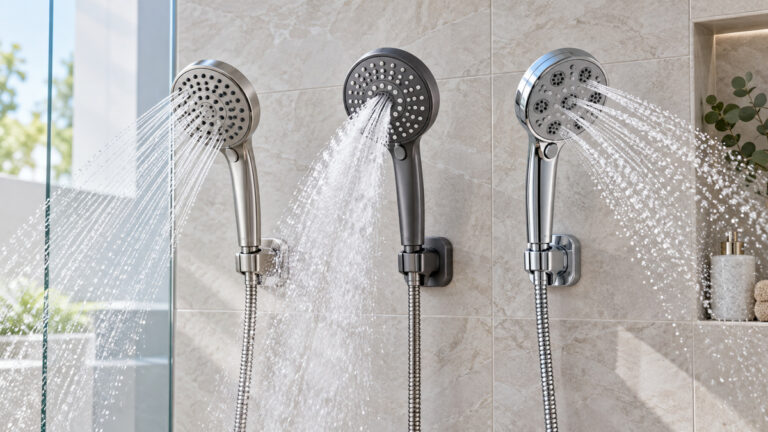
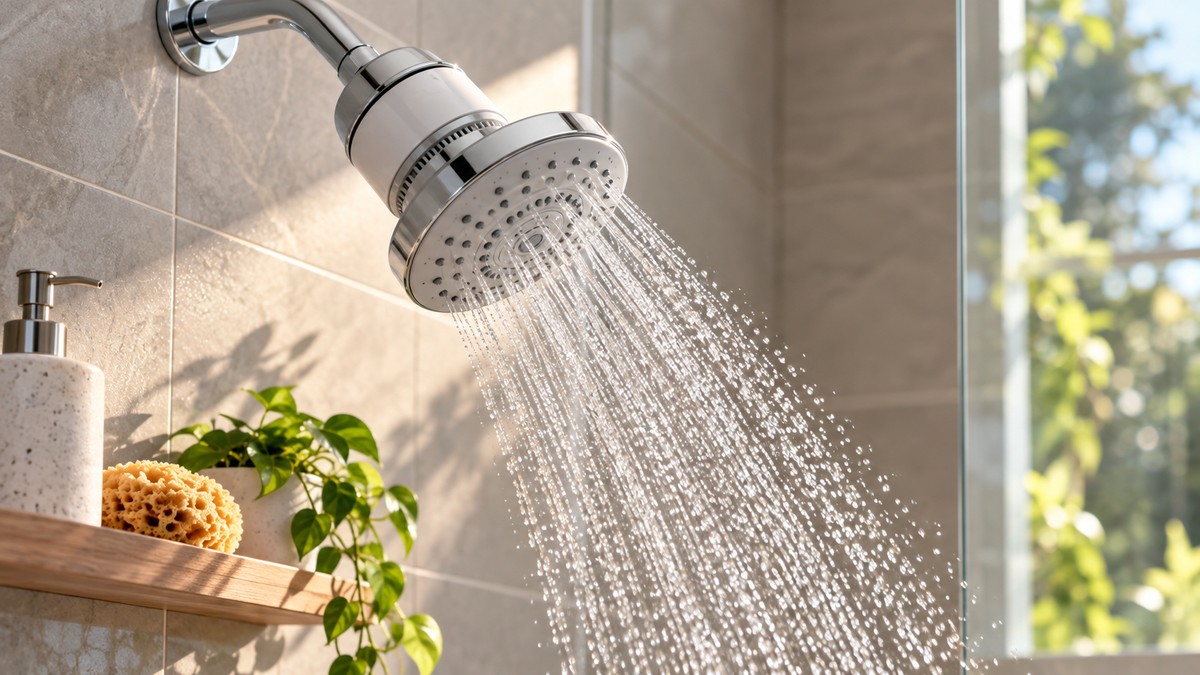
The listing gives the brand as Magichome and the model as DS9-B92A02. The bullets describe 10 spray modes, including rain, massage, mist, spray, a mixed mode, and a pause setting that stops the flow at the head. A 360-degree bracket with a brass swivel ball joint carries the head for overhead or handheld use. The hose is 59 inches of stainless steel, and the listing says the threading is universal G1/2 inch. The bullets also mention 90 anti-clog nozzles. The box includes Teflon tape and extra rubber washers. The listing tells you to remove the plastic covers from both ends of the hose before installing. The file gives no flow figure for this model, so we cannot place it against the 2.0 or 2.5 gpm limits. The finish is inconsistent in the listing: the specs field says Oil Rubbed, while the color field and title say black.
FunnyAir SH-FA001 (B0GSLPS5GZ)
FunnyAir lists three filter cartridges in one box: one installed and two spares. Its specs give a flow figure of 1.78 gallons per minute, nine spray settings, and a 59-inch stainless steel hose. The listing says it uses a 360-degree bracket and that it fits standard shower arms with universal threads, but the file gives no thread size. The specs list a 12-month manufacturer warranty, and the item weighs 9.76 ounces, with a size of 10.63 by 4.92 inches. The bullets also make filtration and skin claims. We do not repeat them, because no source we opened supports them for this product.
Unibath replacement cartridge ZX-LGHSLX-4P14 (B0H13TWXSW)
This is a replacement cartridge, not a shower head. The listing says it works only with Magichome and SR SUN RISE heads, and it lists the compatible listing numbers in its bullets. Check that your head is one of those before buying. The item weighs 6.7 ounces and measures 0.8 by 0.8 by 3.16 inches. The listing says to replace the cartridge every three to four months and describes a two-pack as lasting more than six months. Those are the maker’s claims. The listing also makes chlorine, metal and skin claims that we do not repeat here.
Fitespot Z203 (B0H1WNXR2L)
Fitespot is a handheld head with seven spray settings, a power wash jet on the back, and an ON/OFF button. The specs list a 4.92-foot (about 59-inch) stainless steel hose and a weight of 1.8 pounds, with a size of 12 by 5 inches. The package includes a built-in filter cartridge, two extra washers, a bracket, a grid gasket, Teflon tape and a manual. The flow field says “Maximum” with no number. The bullets say the head fits standard G1/2 inch shower arms. A warranty sentence in the bullets is cut off in our file, so we cannot confirm the terms.
Serei HH-BN (B0HD2GZ443)
Serei is a round, brushed nickel head made of ABS, measuring 8 by 6 inches. The included items list a showerhead, sealing tape, an adjustable wrench, and a diffuser pad with a scent. The specs do not list a hose, a flow figure, or a spray mode count. The bullets describe a lifetime warranty and say the head installs in a few minutes without a plumber. Most of the bullets make ranking, skin, hair and water-quality claims, and none of those is supported by a source we opened for this product, so we leave them out.
Vatex FX2 (B0G34FDHWD)
Vatex is an oval head with a six-inch panel, a 60-inch stainless steel hose, and an angle-adjustable bracket. The bullets describe 102 self-cleaning silicone nozzles and a lifetime warranty. The mode count conflicts inside the listing: the title says 4 modes, the bullets say 4 spray modes, and the included items list says 3 settings. We cannot tell which is correct from the file. The specs list a 15-stage filter cartridge. No flow figure is stated.
FASDUNT CY1 (B0FZKYSYDB)
FASDUNT is a round chrome head with eight spray settings. The specs list a flow figure of 1.8 gallons per minute and a 6.67-foot (80-inch) stainless steel hose. The bullets give more than one flow figure, and the file does not explain the conditions behind each one, so this entry reports only the specs field. The power wash mode is switched on with a button on the back of the handheld. The warranty field says 2 Year Service. The included items list a handheld head, an 80-inch hose, an adjustable mount holder, a filter already in the head, and Teflon tape.
UltrTxenova SH7 (B0GWLK8ZVJ)
UltrTxenova is a round chrome head with six spray modes, measuring 5.9 by 4.9 inches. The bullets say the cartridge is changed by pressing an Open button on the shower panel and pulling the cartridge down, with no tools. They also describe an angle-adjustable brass swivel connector and G1/2 inch threading. The specs do not give a hose length or a flow figure. The bullets say the warranty is lifetime, but the file does not give terms.
Rainnook 16936 (B0H392GY5R)
Rainnook is a round chrome head with ten spray modes and a 5.18-inch spray face. The title and the file’s flags give a flow figure of 1.8 gpm. The head uses a magnetic base for switching between fixed and handheld use, and the hose is 59 inches of stainless steel. The listing says the filter should be replaced every three to six months, depending on water quality and use, which is the maker’s claim. Its replacement steps say to unscrew the bottom pipe, pull the filter straight out, push the new one in, and reattach the pipe. The manufacturer is listed as Shenzhen HuoShui Intelligent Manufacturing Technology Co., Ltd. The file does not give a thread note or a warranty term.
Filters: what the sources say and what they do not
Penn State Extension says that chlorine “can be effectively removed from drinking water using a granular activated carbon (GAC) filter cartridge.” That is a general statement about GAC cartridges. None of the sources we opened says that any of the ten named listings removes chlorine.
The same Penn State Extension source set also warns about metals. Its corrosive water article says: “Granular activated carbon filters are not recommended for copper and lead removal.” Do not read a shower cartridge as a lead or copper fix, whatever the title says.
Softening is a different process. Penn State’s water softening article says that “A physical and chemical process filters the water through an exchange media known as resin or zeolite.” It goes on to describe regeneration, where the resin is backwashed with a salt solution. That describes a water softener, which treats the water at the home’s supply. A shower filter cartridge is not a water softener. Some listing titles use the word softener. The sources we opened do not show that any of these cartridges softens water.
The EPA’s water filtration fact sheet says filters are designed to treat a set amount of water and become clogged after that, so the cartridge needs replacing on the maker’s schedule or sooner. No source we opened states how long a shower cartridge lasts. The intervals in the listings are the makers’ own claims.
General installation notes
The sources we opened do not give installation steps for these heads. The listings give their own instructions: hand-tighten the connections, use the tape that comes in the box, and check the hose ends. The following are general practice, not taken from the sources. Shut off the water or turn off the supply before you start. Wrap the threads with the Teflon tape included in the box. Tighten by hand and do not overtighten, since excess force can crack a plastic fitting. After you turn the water back on, check the joint for drips. If a head drips at the joint, the EPA’s repair advice is to check the seal: “replace the washer or “o” ring inside the showerhead while making this repair.” Only replace the head and its hose. Any other plumbing work should go to a licensed plumber.
What we could not verify: what the sources do not say
- The file gives no flow figure for the Magichome head, Fitespot, Serei, Vatex, UltrTxenova, or the two cartridges.
- No source we opened says that any of the ten listings removes a named contaminant from shower water.
- No source we opened says how long a shower cartridge lasts. The 3 to 6 month intervals in the listings are the makers’ claims.
- No source we opened confirms any warranty term. The warranty figures are listing statements only.
- The file does not say whether any of these heads carries the WaterSense label.
- The Magichome finish conflicts between the specs field and the title. Vatex gives 3 and 4 modes. The two Unibath cartridge listings share a model number but give different weights, 6.7 and 3.52 ounces.
- Serei lists no hose in its included items.
Frequently asked questions
Does a filtered shower head soften hard water?
No source we opened says that a shower filter softens water. Penn State describes softening as an ion exchange process with salt regeneration, which is a whole-house treatment. A shower cartridge is a different product, and the listings in this roundup do not show softening.
What is the flow limit for a showerhead?
The DOE guidance says showerheads made and sold in the United States after January 1, 1994 must use no more than 2.5 gpm. The EPA says WaterSense labeled showerheads must use no more than 2.0 gpm.
Will a high pressure head raise my water pressure?
A showerhead shapes the flow that leaves the head. The pressure it receives comes from your home supply. The EPA describes WaterSense pressure compensation as holding a minimum flow across a range of household water pressures. The listings in the file do not explain how any of them does this.
How often should I replace the cartridge?
The sources we opened do not give a schedule. The listings say three to six months, which is the maker’s claim. The EPA fact sheet says filters become ineffective after they have treated a set amount of water, so follow the maker’s instructions and watch for reduced flow.
Can a shower filter remove lead?
Penn State Extension says granular activated carbon filters are not recommended for copper and lead removal. None of the listings in the file is shown to remove lead, so do not buy one for that purpose.
Do I need tools to install one?
The listings say hand-tighten, and several say the head is tool-free. The Serei listing includes an adjustable wrench. Use the tape included in the box, check the joint for drips after you turn the water on, and do not overtighten.
Bottom line
If you want the Magichome head, check its flow figure with the maker before you buy, because the file does not give one. If flow matters most, the only numbers in the file are 1.78 and 1.8 gallons per minute, and the federal limit is 2.5 gpm. A filter in the head is not a water softener, and no source we opened says the cartridges reduce metals or hardness. For more on flow and pressure, read our guide to water efficient handheld heads, our review of high pressure water saving heads, our guide to showerheads for low water pressure, and our look at handheld head pressure.
Where to check the listings
- View on Amazon Magichome DS9-B92A02
- View on Amazon FunnyAir SH-FA001
- View on Amazon Unibath replacement cartridge (first listing)
- View on Amazon Fitespot Z203
- View on Amazon Serei HH-BN
- View on Amazon Vatex FX2
- View on Amazon Unibath replacement cartridge (second listing)
- View on Amazon FASDUNT CY1
- View on Amazon UltrTxenova SH7
- View on Amazon Rainnook 16936
Sources
- U.S. EPA, WaterSense, Showerheads. https://www.epa.gov/watersense/showerheads (opened 2026-10-27)
- U.S. Department of Energy, FEMP Best Management Practice #7: Faucets and Showerheads. https://www.energy.gov/cmei/femp/best-management-practice-7-faucets-and-showerheads (opened 2026-10-27)
- Penn State Extension, Water Softening. https://extension.psu.edu/water-softening (opened 2026-10-27)
- Penn State Extension, Water Tests for Households Using Public Water Supplies. https://extension.psu.edu/water-tests-for-households-using-public-water-supplies (opened 2026-10-27)
- Penn State Extension, Corrosive Water Problems. https://extension.psu.edu/corrosive-water-problems (opened 2026-10-27)
- U.S. EPA, Water Health Series: Filtration Facts (PDF). https://www.epa.gov/sites/default/files/2015-11/documents/2005_11_17_faq_fs_healthseries_filtration.pdf (opened 2026-10-27)