How to Clean Bathroom Mold and Keep It From Coming Back
As an Amazon Associate we earn from qualifying purchases.
How to clean bathroom mold: scrub the moldy hard surface with detergent and water, then dry it completely. For a patch of about 10 square feet or less, that is usually a job you can do yourself. The mold will come back, however, unless you also fix the water or moisture problem that fed it. This guide covers the cleaning steps, ceilings, when to call a professional, and prevention, with a short section on the shower head.
Quick answer
- If the moldy area is about 10 square feet or less, the EPA says in most cases you can handle the job yourself.
- Scrub hard surfaces with detergent and water, then dry them completely.
- Fix the water source first. Cleaning mold without fixing the water usually means the mold returns.
- Porous materials such as ceiling tiles and carpet may have to be thrown away if they become moldy.
- Run the bathroom fan or open a window when showering, and keep indoor humidity low.
- Call an experienced professional for large growth, hidden mold, contaminated water, or a possible HVAC problem.
Start with the water problem
Mold needs moisture to grow, so a cleanup that skips the moisture source is incomplete. The EPA puts it directly: “If you clean up the mold, but don’t fix the water problem, then, most likely, the mold problem will come back.”
The EPA advises that if you see condensation or moisture collecting on windows, walls or pipes, you should act quickly to dry the wet surface and reduce the moisture or water source. It also says it is important to dry water-damaged areas and items within 24-48 hours to prevent mold growth.
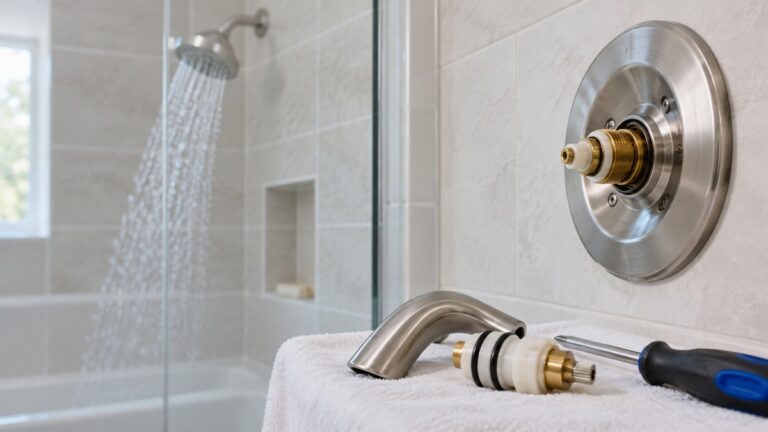
If the leak is in a pipe, a valve, a drain, or a supply line, call a licensed plumber. This guide does not cover that work. A shower head, arm, hose, or filter swap is the only plumbing task covered here.
How to clean bathroom mold step by step
1. Measure the patch before you start
Size decides who should do the work. The EPA says that if the moldy area is less than about 10 square feet, which is roughly a 3 ft. by 3 ft. patch, you can usually handle it yourself by following its guidelines. Larger growth, or a room with a lot of water damage, calls for a more careful approach and often a professional.
| Situation | What the EPA pages say | Your next step |
|---|---|---|
| Patch of about 10 square feet or less | In most cases you can handle the job yourself. | Clean it using the steps in this guide. |
| Mold covers more than 10 square feet, or there was a lot of water damage | Consult the EPA guide Mold Remediation in Schools and Commercial Buildings, which the EPA says is applicable to other building types too. | Hire someone with mold cleanup experience and ask them to follow recognized guidelines. |
| Hidden mold suspected behind walls, ceiling materials, or wallpaper | Disturbing hidden growth such as wallpaper can release a massive amount of spores, and the EPA says to consider hiring an experienced professional. | Avoid disturbing the area and call a professional. |
| Sewage or other contaminated water caused the damage | Call in a professional with experience cleaning and fixing buildings damaged by contaminated water. | Do not start the cleanup alone. |
| HVAC system may be contaminated | Do not run the HVAC system if you know or suspect it is contaminated, because it could spread mold throughout the building. | Read the EPA guide on air duct cleaning before you act. |
2. Protect yourself before you clean
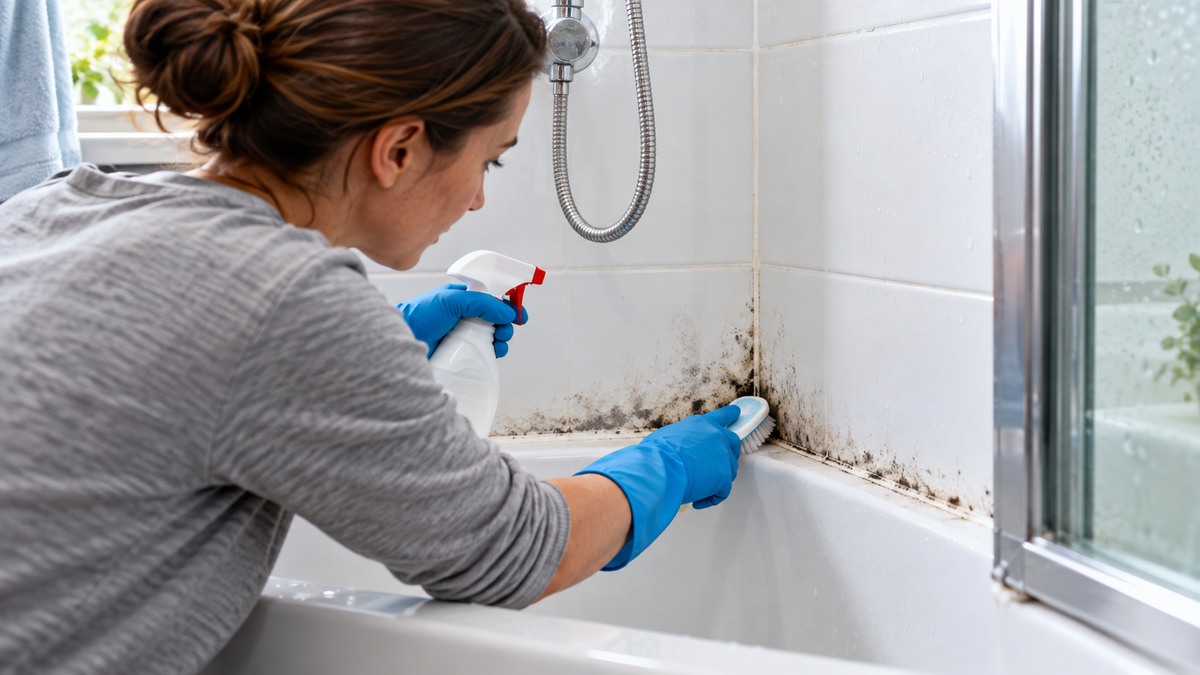
The EPA recommends limiting your exposure to mold and mold spores. Wear long gloves that extend to the middle of the forearm, and goggles. If you use a disinfectant or a strong cleaning solution, the EPA recommends gloves made from natural rubber, neoprene, nitrile, polyurethane, or PVC.
The EPA says to avoid breathing in mold or mold spores and notes that an N-95 respirator can limit your exposure. A respirator only works if it fits properly, so follow its instructions.
3. Scrub the hard surface
For hard surfaces, the EPA’s core instruction is short: “Scrub mold off hard surfaces with detergent and water, and dry completely.” Avoid touching mold or moldy items with your bare hands, as the EPA advises.
The EPA does not give a detergent-to-water ratio, and this guide does not give one either. Follow the directions on the cleaner you already have, and do not start mixing products to make a stronger solution.
4. Dry everything completely
The EPA tells people to dry all items completely after cleaning. The cleanup is not finished until the water or moisture problem is fixed.
5. Check the result
The EPA says visible mold and moldy odors should not be present when the job is done. Mold can leave staining and cosmetic damage behind, and the EPA notes it may not be possible to restore an item to its original appearance.
Do not paint or caulk over a moldy surface. The EPA says to clean up the mold and dry the surface before painting, because paint applied over moldy surfaces is likely to peel.
How to remove bathroom mold from different materials
How to remove bathroom mold depends on the material. The EPA separates hard surfaces, which can usually be scrubbed and dried, from absorbent or porous materials. Mold can grow on or fill in the empty spaces and crevices of porous materials, so it may be difficult or impossible to remove completely. The EPA says absorbent materials such as ceiling tiles and carpet may have to be thrown away if they become moldy.
How to clean bathroom mold on the ceiling
A bathroom ceiling is a common place to find mold, and it usually points to moisture that is not leaving the room. Start with the moisture source. Is the fan working? Can you open a window during and after a shower? Is there a cold surface above the ceiling, such as a pipe, where condensation forms? The EPA’s advice is to reduce the moisture or water source, not only to clean the surface.
If the ceiling is a porous ceiling tile, the EPA says it may have to be thrown away once it becomes moldy. For a hard, painted ceiling, follow the scrub, dry, and check steps above. Mold can also be hidden. The EPA lists locations such as the back side of drywall, the top side of ceiling tiles, and areas around leaking or condensing pipes. If you find signs of water above the ceiling, call a professional rather than scrubbing from below.
The sources we opened give no ceiling-specific cleaning method. Use the general steps, and stop if the growth is large, keeps returning, or may be hidden.
How to treat bathroom mold without making it worse
The EPA’s guidance is that if there is mold growth in your home, you must clean up the mold and fix the water problem. It also says mold damages what it grows on, and the longer it grows, the more damage it can cause.
Chlorine bleach is a common choice, and the EPA says a biocide such as chlorine bleach is not recommended as a routine practice during mold cleanup. If you do use a disinfectant or biocide, the EPA says to ventilate the area and exhaust the air to the outdoors. Never mix chlorine bleach with other cleaning solutions or detergents that contain ammonia, because toxic fumes could be produced.
Killing mold is also not the same as removing it. The EPA says dead mold may still cause allergic reactions in some people, so it must also be removed.
How to prevent bathroom mold from coming back
The EPA states the central rule in plain words: “The key to mold control is moisture control.” Some mold spores will always be in indoor air and house dust, but they will not grow if moisture is not present.
In the bathroom, the EPA’s advice starts with ventilation. Run the bathroom fan or open the window when showering. The EPA advises keeping indoor humidity below 60 percent, and ideally between 30 and 50 percent relative humidity.
Cold surfaces are another source of trouble. The EPA recommends covering cold surfaces, such as cold water pipes, with insulation, because condensation forms on them. Rust on a pipe is an indicator that condensation is occurring.
The EPA also notes that places that are often or always damp can be hard to keep completely free of mold. If mold keeps reappearing in the shower or elsewhere in the bathroom, increasing ventilation and cleaning more frequently will usually prevent it from recurring, or at least keep it to a minimum.
If you rent, the EPA says to report all plumbing leaks and moisture problems immediately to your building owner, manager, or superintendent.
Keep the shower head clean too
The New Jersey Department of Health’s guidance on shower heads says that routine cleaning “reduces the amount of harmful waterborne bacteria (including Legionella)” on the shower head, which you can be exposed to while showering. The same guidance says these bacteria are responsible for diseases such as Legionnaires’ disease and Pontiac fever. This is a state source on shower heads, not on mold.
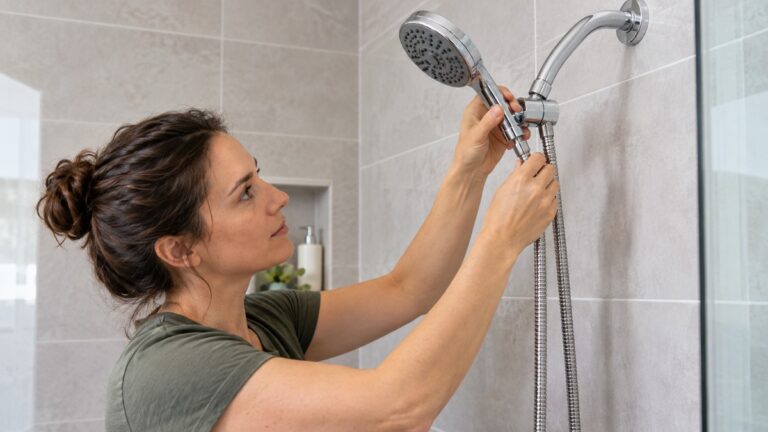
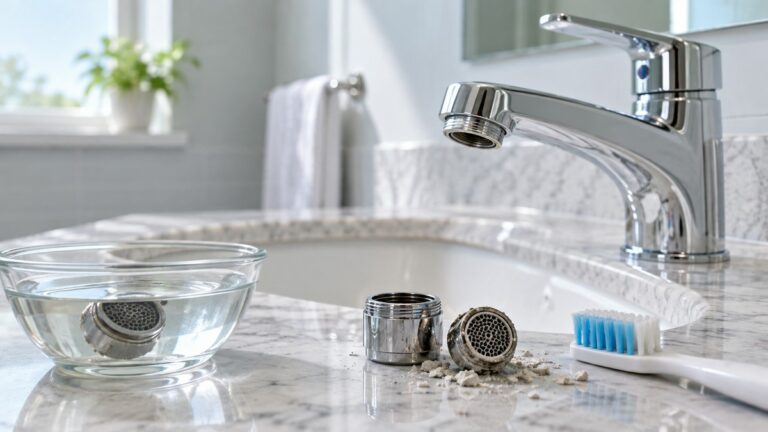
The New Jersey steps are simple. Remove the shower head by hand, or with an adjustable wrench and a cloth wrapped around the arm if it is stuck. Clean the arm threads and remove any old thread sealant tape. Take the head apart if you can, clean the filter screen with a toothbrush and dish soap for stubborn debris, and soak the head in distilled white vinegar overnight. Clear any holes still clogged by mineral deposits with a needle or straightened paper clip, then reinstall. The guidance gives no vinegar-to-water ratio, so follow the soak as written.
For step-by-step detail on the vinegar method, read our guide to cleaning a shower head with vinegar. If your head has rubber nozzles, our guide to cleaning rubber nozzles on a rain shower head covers that part of the job. For the cleaning products themselves, see the shower head cleaner options we cover.
What mold can do to your health
The EPA says that molds have the potential to cause health problems. Molds produce allergens and irritants, and inhaling or touching mold or mold spores may cause allergic reactions in sensitive individuals. Allergic responses include hay fever-type symptoms, such as sneezing, runny nose, red eyes, and skin rash. Mold exposure can also irritate the eyes, skin, nose, throat, and lungs.
For people with asthma, the EPA says molds can trigger asthma episodes in sensitive individuals, and people with asthma should avoid contact with or exposure to molds. Its overview does not describe all potential health effects, and research is ongoing. If you have health concerns, consult a health professional before you start a cleanup. The sources we opened do not give a list of other health effects.
When to call a professional
Hire help when the job is bigger than a small patch, when water damage is extensive, when the mold may be hidden, or when the cause is contaminated water. The EPA says that if you hire a contractor, make sure they have experience cleaning up mold, check references, and ask them to follow recognized guidelines, such as those of the American Conference of Governmental Industrial Hygienists or the Institute of Inspection, Cleaning and Restoration Certification.
How we chose
This post uses only the guidance we could open and read in this session. We opened the EPA’s Mold Cleanup in Your Home page, A Brief Guide to Mold, Moisture and Your Home, and Mold and Health. For a state health source on the shower head, the New Jersey Department of Health guidance was the one we could open and quote.
The CDC mold pages returned HTTP 403 when opened, so the CDC is not a source for this post. Several state pages also returned HTTP 403 or 404, so they are not cited. No products were picked, because the guidance covers cleaning and moisture control, not brands. This post has no price, store, or ranking content.
What we could not verify: what the sources do not say
- No bleach-to-water or vinegar-to-water ratio for mold cleanup. The EPA pages discourage routine biocide use, and the New Jersey page gives no ratio for its vinegar soak.
- No ceiling-specific cleaning method. The EPA gives general steps for hard surfaces and porous materials.
- No fixed cleaning schedule. The EPA says more frequent cleaning helps, but it does not name a frequency.
- No federal mold limit. The EPA says no federal limits have been set for mold or mold spores, and it does not regulate mold or mold spores in indoor air.
- No fan size, exhaust rate, or model recommendation for bathroom ventilation.
- No full list of health effects. The EPA says research is ongoing, and the CDC pages were not available to us.
FAQ
Can I clean bathroom mold with vinegar?
The EPA pages we opened give detergent and water as the cleaning step for hard surfaces, and they do not mention vinegar for mold. The New Jersey guidance uses distilled white vinegar to soak a shower head whose holes are clogged by mineral deposits, which is a different job. Whether vinegar suits a specific mold problem is a question the sources we opened do not answer.
Is bleach the best way to clean bathroom mold?
Not as a routine step. The EPA says a biocide such as chlorine bleach is not recommended as a routine practice during mold cleanup. Scrubbing with detergent and water, then drying completely, is the approach the EPA describes. If you do use bleach, ventilate the room and never mix it with ammonia-containing products.
How large a mold patch can I clean myself?
The EPA’s threshold is a moldy area of less than about 10 square feet. Larger growth, large water damage, contaminated water, or suspected hidden mold are reasons to call an experienced professional.
Can bathroom mold make me sick?
The EPA says mold can cause allergic reactions in sensitive people, and can trigger asthma episodes in people with asthma who are sensitive to mold. If you have health concerns, the EPA advises consulting a health professional before a cleanup.
Do I need to test for mold before cleaning?
Usually not. The EPA says that in most cases, if visible mold growth is present, sampling is unnecessary. Sampling can help check whether an area was adequately cleaned, but the EPA says it should be done by professionals with specific experience in mold sampling.
Bottom line
Fix the water first, scrub the mold off hard surfaces with detergent and water, dry everything completely, and keep the room drier than it was before. If the patch is larger than about 10 square feet, the water damage is extensive, or the mold may be hidden, stop and call an experienced professional.
Sources
- US EPA, Mold Cleanup in Your Home (opened 2026-10-23, HTTP 200, last updated June 4, 2026). Cleanup size threshold, scrubbing and drying steps, bathroom ventilation tip, and contractor guidance.
- US EPA, A Brief Guide to Mold, Moisture and Your Home (opened 2026-10-23, HTTP 200, last updated February 18, 2026). Moisture control, humidity, biocides, protective equipment, hidden mold, and sampling.
- US EPA, Mold and Health (opened 2026-10-23, HTTP 200, last updated February 18, 2026). Allergy, irritation, and asthma statements.
- New Jersey Department of Health, Guidance for Removing and Cleaning a Shower Head (opened 2026-10-23, PDF). Shower head cleaning steps and the Legionella statement.