How to Clean a Bathtub: Baking Soda, Stains and Jets
As an Amazon Associate we earn from qualifying purchases.
Knowing how to clean bathtub surfaces starts with the same basics for most tubs: wet the surface, scrub it with a mild detergent or a light baking soda paste, rinse, and dry it completely. Baking soda helps with light grime but does not fix every stain. Whirlpool jets need their own flushing schedule, separate from surface cleaning. This guide covers those jobs in order, then mold, and it names what the sources we opened do not settle.
Quick answer
- Clean the tub surface with a mild detergent and warm water, rinse, and dry. Avoid harsh abrasives on glossy finishes.
- Baking soda works as a mildly abrasive scrub when it is used as a paste with light pressure.
- Stains need a stain-specific approach. The sources give general cautions, not a method for every stain.
- Whirlpool jets should be flushed at least twice a month, following your model’s manual.
- Never mix chlorine bleach with other cleaning solutions or with detergents that contain ammonia.
How to clean bathtub surfaces step by step
Clear shampoo bottles, soap dishes and bath mats first so you can reach every surface. Wet the tub with warm water, apply a mild liquid detergent, and scrub from the rim down. Pay attention to the drain area, the faucet base and the corners, where soap scum and dampness collect. Rinse with clean water until no film or suds remain, then dry the surface with a soft towel.
Drying matters as much as cleaning. The EPA states that “Places that are often or always damp can be hard to maintain completely free of mold,” and that increasing ventilation and cleaning more frequently will usually prevent mold from recurring. Run the bathroom fan or open a window during and after your bath.
How to clean bathtub with baking soda
The University of Wisconsin Extension describes baking soda as a mild alkali that dissolves grease in water. It also notes that when baking soda is not fully dissolved, as when it is sprinkled on a damp sponge, it is “mildly abrasive and can lift dirt for easy removal.” That is the property that makes it useful in a tub: it lifts soap film and light dirt without the grit of a heavy cleanser.
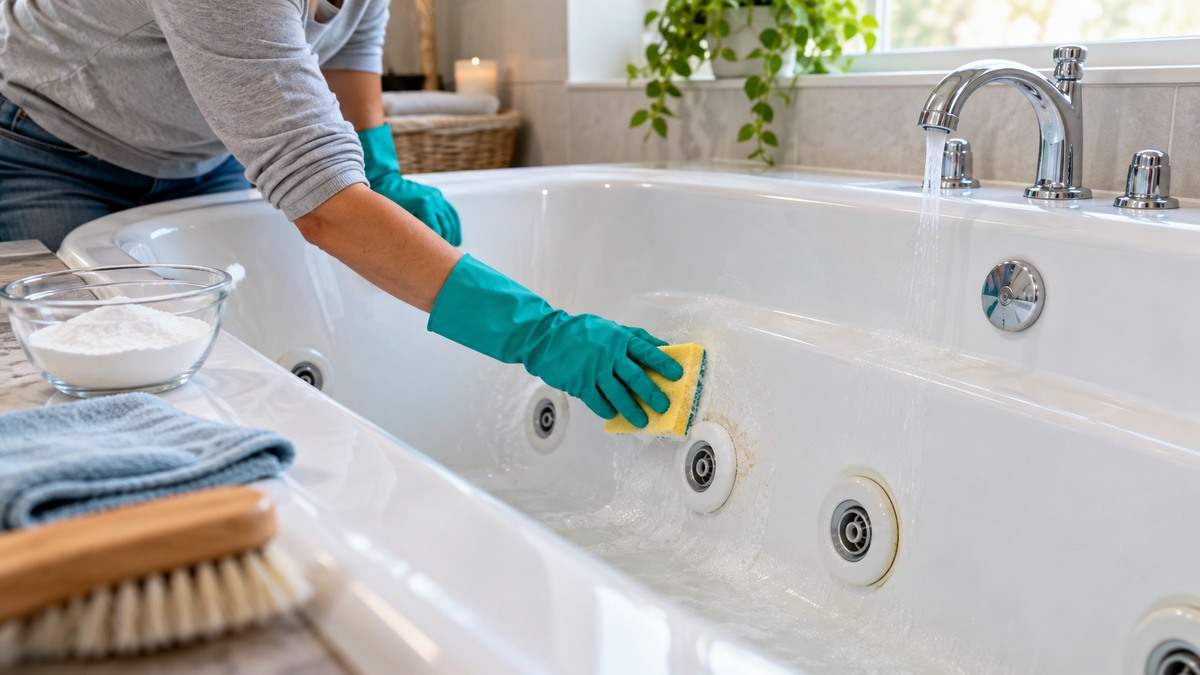
A practical method is to mix baking soda with just enough water to make a paste that spreads without running. Apply it with a damp sponge or soft cloth and rub gently. Rinse thoroughly and dry the tub once the paste is gone.
Baking soda is a scrub. The sources we opened do not say that it disinfects a tub or kills mold, so do not treat a baking soda wipe as a mold treatment. For mold, follow the EPA steps later in this guide.
How to clean bathtub stains
Stains are the hardest part of bathtub cleaning, and the sources do not give a method for every type. The Michigan State University Extension cleaning chart says acids “remove hard water deposits from many surfaces.” That fits the chalky white film left by hard water. The same chart says acids “can injure eyes, skin and fabrics” and “may have bleaching effects,” so an acid cleaner needs care and a careful rinse, and it should not be the first choice on an unknown finish.
For other stains, the sources offer only general cautions. Harsh abrasives scratch shiny finishes, so a stain that does not lift with a soft sponge and baking soda paste may need a product made for that stain and that finish, not a stronger scrub. The Idaho Extension chart also notes that many cleaners contain bleach, acids or rust removers, so read the label before use.
If a stain persists after gentle cleaning, check the bathtub maker’s care guide for your finish. The Jacuzzi Luxury Bath operating manual says: “Never use abrasive or caustic household cleaners on any Jacuzzi Luxury Bath product.” Where your manual is silent, stop before using anything stronger than a mild detergent.
How to clean bathtub jets
Whirlpool jets are a plumbing system as well as a surface, so they need a separate schedule. The Kohler whirlpool operating instructions state: “Flush your whirlpool system twice a month or more depending upon usage.” The Jacuzzi builder-series guide says: “The whirlpool system should be purged at least twice a month.” Pick a fixed day each month for the flush so you do not forget it.
The Kohler instructions describe a flush with a low-foaming powder automatic dishwasher detergent and household bleach. They say to turn the jet trim rings fully clockwise to reduce air induction, fill the whirlpool with hot water to at least 2 inches above the highest jet, add 2 teaspoons of the detergent and 20 ounces of bleach, run the system for 5 to 10 minutes, then turn it off and drain. Those figures come from that model’s manual. Read your own manual before you copy the recipe.
If you use bleach, ventilate the room. The EPA’s bleach guidance says: “If you choose to use disinfectants or biocides, always ventilate the area and exhaust the air to the outdoors.” Never combine bleach with ammonia-containing products, because the EPA warns that toxic fumes could be produced.
Temperature limits differ by manufacturer. The Kohler guide says not to let the water in the whirlpool exceed 104 F (40 C). The Jacuzzi builder-series guide says not to fill the bath “in excess of 140F (60C)” to prevent discoloration of the acrylic finish. Use the number in the manual for your model.
Clean the suction cover too. The Jacuzzi Luxury Bath manual says to clean the suction cover or strainer of hair and debris when needed, by back-flushing debris from its holes. The same manual says: “Do not use oil or oil-based bathtub additives.” The Kohler guide adds that heavy, vegetable-based shampoos and bath oils should not be used in the tub.
How to keep bathtub mold from coming back
The EPA’s mold cleanup page says to scrub mold off hard surfaces with detergent and water, dry completely, and fix plumbing leaks and other water problems as soon as possible. For a small patch on a tub or tile surface, a detergent and water scrub followed by thorough drying is the method the EPA describes.
The EPA’s bleach guidance says that using a chemical that kills organisms such as mold, such as chlorine bleach, is “not recommended as a routine practice during mold cleanup.” It also says that dead mold may still cause allergic reactions in some people, so it is not enough to kill the mold; it must also be removed. The EPA’s page on mold and health says: “Research on mold and health effects is ongoing.” This guide does not claim mold causes a specific illness in any person.
Bathtub cleaning options compared
The table sets out each method against what the sources state and where they stop. Where a source gives no detail, the cell says so.
| Method | What the sources state | Limit or caution |
|---|---|---|
| Mild detergent and warm water | EPA: scrub mold off hard surfaces with detergent and water, then dry completely | Not a disinfectant claim; rinse and dry afterwards |
| Baking soda paste | Wisconsin Extension: mildly abrasive when not fully dissolved | The sources do not say it kills mold; avoid harsh scrubbing |
| Acid cleaner for hard water film | Michigan State Extension: acids remove hard water deposits from many surfaces | Can injure skin and eyes and may bleach some surfaces; no surface-by-surface list in the source |
| Bleach flush for whirlpool jets | Kohler manual: dishwasher detergent and household bleach in a hot-water run for 5 to 10 minutes | Ventilate; never mix with ammonia-containing products; follow your model’s manual |
| Manufacturer jet cleaner | Jacuzzi manual: two-part plumbing system cleaner, clean after each use, twice a month minimum | Product and dosing are specific to that brand; not stated for other brands |
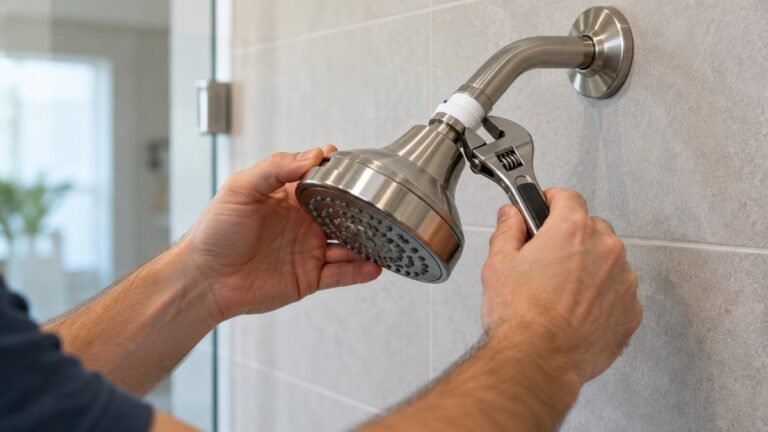
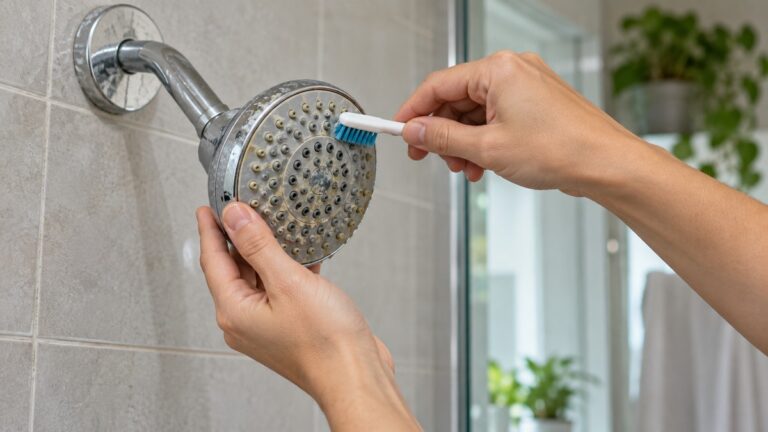
Some readers also want to clean the shower head that feeds the tub. That is a different job. For the head, see our vinegar method for shower heads. If the head has rubber nozzles, the steps in our rain-head nozzle guide apply. For cleaners made for shower heads, see our roundup of shower head cleaners.
How we chose
This guide was built from sources we opened on 2026-10-23. We searched for manufacturer care pages and extension or government pages on tub cleaning, jet flushing, baking soda and mold. We kept a source only when we opened it and found the quoted sentence or a close paraphrase in its text. Pages that returned errors or access blocks, including a CDC bleach page and a Kohler care page, were not used. Search snippets and blog summaries were not used as sources.
The guide covers four questions: how to clean the tub, how to use baking soda, how to handle stains, and how to flush jets. Mold is included because the EPA pages give clear method and safety guidance on it. We did not rank or price any product. Product names appear only where a manufacturer’s manual names its own cleaner.
What the sources do not say
The sources do not give a stain-by-stain method for most bathtub stains. They do not give a baking soda ratio that is safe for every finish, and they do not say whether baking soda removes rust, soap scum or mold stains from a specific tub. They do not describe a citric acid method, so this guide does not offer one.
The sources also do not compare cleaners by effectiveness, and they do not give a general deep-clean interval for a bathtub beyond the jet flush schedule.
What we could not verify
- A stain-removal method for rust on acrylic or fiberglass tubs.
- Whether baking soda disinfects a tub or kills mold.
- Dwell times for commercial bathtub cleaners. The product label is the authority.
- How to repair a scratched tub surface. This guide does not cover refinishing.
- Any cleaning method for brands or models whose manuals we did not open.
Frequently asked questions
Can I use baking soda to clean a bathtub every day?
Baking soda is mildly abrasive, and the Idaho Extension warning about harsh abrasives on shiny finishes applies. A light paste used with a soft sponge and rinsed away is the gentlest version of the method. For daily upkeep, a mild detergent and a quick rinse may be enough, and baking soda can be saved for spots that need more scrubbing.
Does baking soda kill mold in a bathtub?
The sources we opened do not say that baking soda kills mold. The EPA calls for scrubbing mold off hard surfaces with detergent and water, then drying completely. Dead mold may still cause allergic reactions, so it must be removed, not just killed.
Can I mix bleach and vinegar when cleaning a tub?
The EPA’s bleach guidance says never to mix chlorine bleach with other cleaning solutions or with detergents that contain ammonia, because toxic fumes could be produced. The pages we opened do not address vinegar, so this guide does not make a vinegar claim. Clean with one product at a time, rinse thoroughly between products, and ventilate the room when you use bleach.
How often should I flush the jets in my whirlpool tub?
The manufacturer guides we opened say at least twice a month. Kohler ties the interval to usage, so a heavily used tub may need flushing more often. Check your model’s manual for the exact procedure.
When should I call a plumber about a bathtub or jets?
Call a licensed plumber for any repair beyond routine cleaning. Turn off the water supply before working on any part of the system, and follow the manual for the parts you can safely reach. This guide does not cover plumbing repairs.
Bottom line
Use the gentlest method that works, rinse completely, and dry the surface. Mild detergent and water are the EPA’s core method for hard surfaces, baking soda is a light scrub, and stains need a stain-specific approach that the sources do not give for every case. Whirlpool jets need flushing at least twice a month, using your model’s own manual. Never mix bleach with other cleaning solutions or with ammonia-containing detergents.
Sources
- EPA, “Mold Cleanup in Your Home,” https://www.epa.gov/mold/mold-cleanup-your-home (opened 2026-10-23)
- EPA, “Should I use bleach to clean up mold?,” https://www.epa.gov/mold/should-i-use-bleach-clean-mold (opened 2026-10-23)
- EPA, “Mold and Health,” https://www.epa.gov/mold/mold-and-health (opened 2026-10-23)
- University of Wisconsin Extension, “Baking Soda,” https://oconto.extension.wisc.edu/files/2011/02/Baking-Soda.pdf (opened 2026-10-23)
- University of Idaho Extension, cleaning products guide, https://objects.lib.uidaho.edu/uiext/uiext30933.pdf (opened 2026-10-23)
- Michigan State University Extension, E1859 household cleaners chart, https://archive.lib.msu.edu/DMC/extension_publications/e1859/e1859.pdf (opened 2026-10-23)
- Kohler, whirlpool operating instructions (document 1010564-5), https://resources.kohler.com/onlinecatalog/pdf/1010564_5.pdf (opened 2026-10-23)
- Jacuzzi Whirlpool Bath builder series instructions, https://pdf.lowes.com/productdocuments/616bcc59-43b7-457b-b9a7-f39c16fbcc2e/01462237.pdf (opened 2026-10-23)
- Jacuzzi Luxury Bath operating manual (LG74000D), https://links.imagerelay.com/cdn/574/ql/0170ead7890942f08dd476cf158e1aa5/LG74000D_Operating_Manual.pdf (opened 2026-10-23)