How to Remove Soap Scum From Shower Tile and Glass
As an Amazon Associate we earn from qualifying purchases.
How to clean soap scum off shower tile and glass: use the mildest cleaner the tile or glass maker allows, let it stand only as long as the source says, scrub with a non-metallic brush or a soft pad, rinse with plain water, and dry the surface. Soap scum is a film of soap residue and hard-water minerals. Cleaning removes the film, and drying the walls after each shower limits how much builds up again. Vinegar and dish soap is a common homemade option, but tile makers warn that acids can damage grout and glazed surfaces, so test a hidden spot first. Never mix any cleaner with bleach.
Quick answer
- Tile: start with a neutral pH cleaner, or a multipurpose spray cleaner that the tile maker names for soap scum. Let it stand about five minutes, scrub with a non-metallic brush, and rinse.
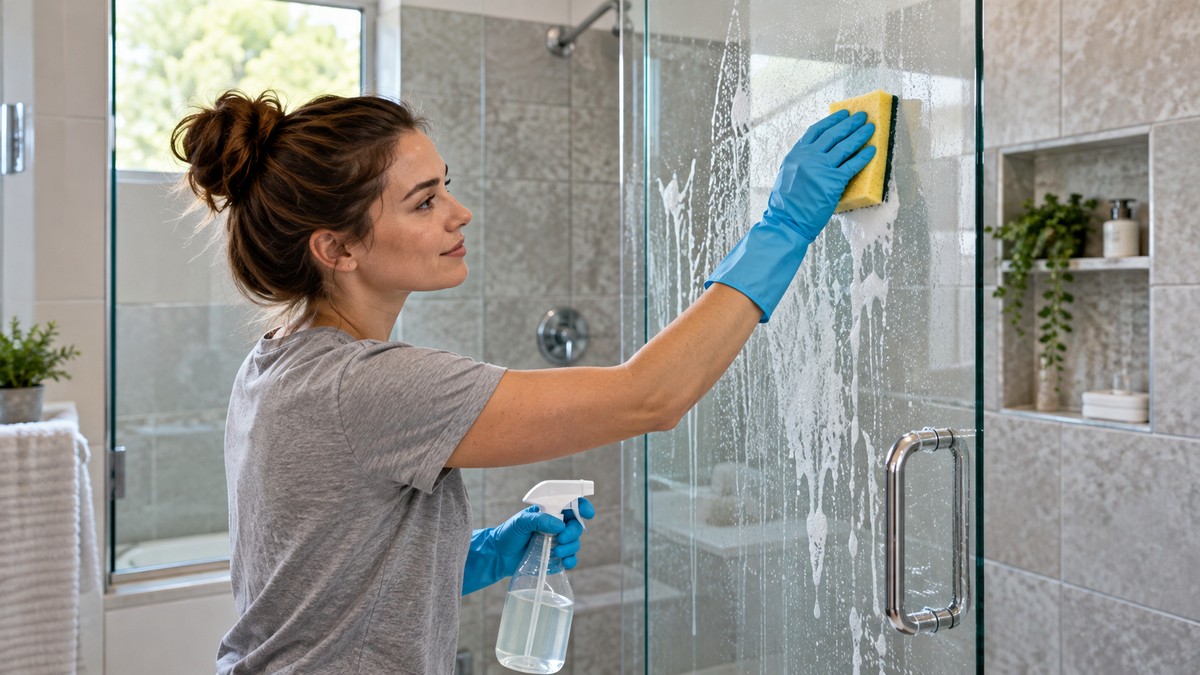
- Glass: squeegee after each use. Do a deeper weekly clean with a mild, non-abrasive, ammonia-free glass cleaner, and rinse thoroughly.
- Vinegar: one glass guide names a 50/50 water and vinegar solution. Tile makers warn about acids, so test first and keep the contact time short.
- Never mix bleach with vinegar, ammonia, or any other cleaner. Rinse with plain water between products.
Before you start: what not to mix
Health Canada warns that “Bleach will react with any cleaning product containing ammonia or an acid, including vinegar.” The New Jersey hazard alert on mixing cleaners says that “When chlorine bleach is mixed with an acid, chlorine gas is produced,” and its list of dangerous mixes includes ammonia and acid-based products. The University of Florida IFAS publication on homemade cleaners tells readers never to mix bleach with ammonia, vinegar, or other household cleaners.
Health Canada advises “Use goggles and rubber gloves” when using bleach. Florida Tile’s care page says not to combine ammonia and household bleach. In practice, that means ventilating the bathroom, wearing gloves, using one product at a time, and rinsing with plain water before you switch products.
How soap scum forms
Bob Vila’s guide describes the chemistry this way: “Soap scum forms when the fatty acids, talc, and other ingredients in bar soap react with the minerals in hard water.” Penn State Extension describes the mineral side of hard water in a short line: softening “involves removing the scale caused by calcium and magnesium.” The film is part soap and part mineral.
How to clean soap scum from a shower
This routine works on both tile and glass.
- Ventilate the room and put on gloves. Do not start with any product that contains bleach.
- Choose a cleaner from the tile or glass sections below. Start with the mildest option that the surface maker allows.
- Apply it with a cotton mop, cloth, sponge, or non-metallic brush. American Olean lists these tools for applying and agitating its multipurpose spray cleaner on wall tile in residential baths and showers.
- Let it stand for the time the source gives. The sources differ: about five minutes for a neutral pH cleaner (Florida Tile), one to two minutes for a homemade vinegar and dish soap spray (Makers Clean), and about 15 minutes for a vinegar and dish soap spray (Bob Vila).
- Scrub with a soft or non-metallic tool. Florida Tile warns that steel wool pads can scratch the surface of tile.
- Wipe up the residue with a cotton towel or sponge, then rinse with plain water. Vigo’s glass guide says to rinse thoroughly to remove any cleaner residue.
- Dry the walls with a towel or a squeegee. Bob Vila recommends squeegeeing or towel drying the shower after every use.
How to clean soap scum off shower tiles
Start with a neutral cleaner
Florida Tile’s care page says that tiled bathroom surfaces “may require a more thorough routine cleaning because of a build-up of soap scum, body oils or hard-water stains.” Its method is a damp cloth or sponge with a neutral pH cleaner, left to stand about five minutes before rinsing and drying. American Olean’s ceramic tile guide says a multipurpose spray cleaner that removes soap scum, hard water deposits and mildew can be used on wall tile in residential baths and showers.
Read the label before you use any product on a glazed or textured wall. None of the opened sources gives a dilution for a commercial tile cleaner, so follow the label.
When vinegar is an option, and when it is not
Vinegar and dish soap is the most common homemade method in the sources. Bob Vila’s guide calls for equal amounts of vinegar and water in a spray bottle, plus one tablespoon of dish detergent or liquid dish soap. It says to spray the mixture onto the soap scum and let it sit for about 15 minutes before scrubbing and rinsing. Makers Clean describes a similar spray that sits for one to two minutes. It gives no amount for the dish soap, so this post does not repeat that version.
The tile guides do not agree on vinegar. Florida Tile says that for showers, tub surrounds and other wet areas, light acidic cleaners are recommended to remove hard water mineral deposits. American Olean warns that acids can damage grout and the glazed surface of the tile. Both are manufacturer statements, so check your own tile’s care guide, test a hidden spot, keep the contact time short, and rinse thoroughly. If the maker’s guide does not mention acids, skip vinegar.
Vinegar is not a choice on natural stone. Makers Clean advises avoiding vinegar on a natural stone shower because acids can damage the stone. American Olean states that sulfamic acid or grout removers should never be used on natural stone products.
Natural stone and polished marble
Florida Tile says acidic cleaners are “not recommended on acid-sensitive surfaces such as metallic glazes or polished marble,” and recommends a neutral or alkaline cleaner for those surfaces. No stone supplier’s guide was opened, so stone steps here come only from the tile makers and Makers Clean.
Grout lines and corners
Grout gets its own treatment in the tile-maker guides, because acids and ammonia can harm it. American Olean says that acids can damage grout and that ammonia can discolor grout. For heavy buildup in grout, its guide says to use a professional strength tile and grout cleaner that can remove grease, soap scum, body oil and mildew stains. Bob Vila reports that a melamine sponge can wipe soap scum from shower door glass, tile grout and the tub basin. No opened source gives a grout-specific mix, dwell time, or scrubbing ratio, so none is given here.
Tools and textured tile
American Olean recommends a cotton mop, cloth, sponge, or non-metallic brush for applying the cleaner. Florida Tile says a soft scrub brush or white nylon scrub pad can replace a mop or sponge on textured or uneven tile, and warns that steel wool pads or strong acids can scratch or damage tile.
How to clean soap scum off glass
For shower glass, the manufacturer routine is short. Vigo’s guide says to “Squeegee after each use to prevent water spots,” and to “do a deeper clean weekly with a mild, non-abrasive, ammonia-free glass cleaner.” Kohler’s enclosure guide tells owners to “Use a shower squeegee to clean the glass after showering.” Both steps are aimed at keeping the film from forming.
The weekly clean
Vigo says to spray the cleaner onto a cloth or sponge first, then clean the glass, and rinse thoroughly with clean water to remove any cleaner residue. Vigo also says not to spray directly onto the fixtures, because drops can enter openings and gaps. For the hardware itself, Vigo’s guide says to “keep it simple: a soft, damp cloth with mild soap, then dry with a clean cloth.”
Vinegar on glass
Vigo’s guide gives the one ratio in this post for glass: a 50/50 water and vinegar solution for hard water and soap scum. Apply it to the glass, let it work for a short time, and rinse thoroughly. Makers Clean gives a vinegar and dish soap spray with a one-to-two-minute wait, and it advises a non-scratch cloth worked in an S-pattern. Kohler’s enclosure guide says “Do not allow cleaners to sit or soak on shower enclosure surfaces,” which is a reason to keep the wait short on glass, even if a homemade recipe calls for longer.
None of the opened sources says what to do when glass stays cloudy after a proper weekly clean. Hard-water spots on glass are a separate problem, and this post does not cover them in depth.
What to avoid on glass
Kohler’s enclosure guide says “Never use abrasive cleaners,” and says not to use bristle brushes or abrasive sponges on the enclosure surfaces. Vigo’s warranty language says that abrasive cleaners, steel wool and harsh chemicals “will scratch, damage and/or dull the product and/or finish and void this warranty.”
Baking soda is a common scrub on glass, but Makers Clean warns that it is mildly abrasive and says to test it in a hidden area first. The sources do not give a ratio for a baking soda paste that is safe for glass, so none is given here. If you are unsure, skip baking soda on glass and use the weekly cleaner instead.
Keeping soap scum from coming back
Most of the work is done by drying and squeegeeing after each shower. Kohler’s Vikrell bath and shower care sheet also says to wipe the unit with a soft cloth after each use to prevent a buildup of soap and scum. Bob Vila notes that wiping away the residue after each bath removes a good portion of it before it builds up.
- Squeegee and wipe after each shower. Vigo, Kohler and Bob Vila all recommend this habit.
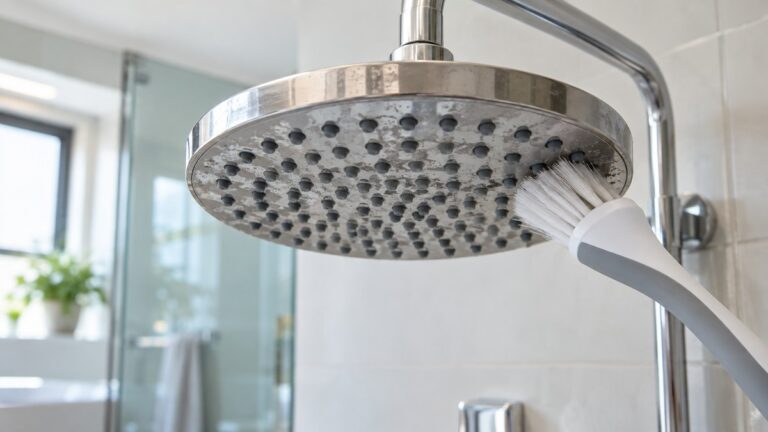
- Rinse and wipe fixtures. Kohler says to rinse and wipe the fixtures after cleaning to prevent soap build-up. If the head itself is crusted with scale, the shower head vinegar cleaning guide covers that separate job, and the rain shower head nozzle guide covers rubber nozzles.
- Consider your water. Penn State Extension describes softening as removing the scale caused by calcium and magnesium. Installing a softener is plumbing work beyond this post, so call a licensed plumber.
How we chose
The sources were opened on 2026-10-23. Manufacturer care guides and government or university pages came first. Trade and cleaning-company pages were used only for methods the first group did not cover, and they are labelled as such. Quoted sentences were checked against the downloaded page text, and other statements are paraphrases. Pages that returned HTTP 403 or 404 were not used, including a Washington State bleach page and a CDC cleaning page. Ten pages are cited. No product was picked, ranked, priced or rated, and no cleaner was tested.
What we could not verify: what the sources do not say
- No opened source gives one dwell time for vinegar on soap scum. The sources give one to two minutes, about five minutes, and about 15 minutes, and Kohler says not to let cleaners sit on enclosure surfaces.
- No tile maker gives a vinegar ratio for tile. The 50/50 mix comes from a glass guide.
- The tile guides disagree about acids. Florida Tile recommends light acidic cleaners for showers, and American Olean warns that acids can damage grout and glazed tile.
- No opened source says how a melamine sponge affects a particular glaze, coating or grout.
- No opened source gives a percentage of soap scum removed by any method.
- No stone supplier’s guide was opened, so stone steps are limited to what the tile makers and Makers Clean state.
- Sealing tile and grout is not covered here. Hard-water spots on glass are a separate topic.
FAQ
Can I use vinegar to clean soap scum off shower tile?
The sources disagree. Bob Vila’s guide uses equal parts vinegar and water with a tablespoon of dish soap, while American Olean warns that acids can damage grout and glazed tile. Check your tile’s care guide, test a hidden spot, keep the contact time short, and rinse well.
Does baking soda remove soap scum?
Makers Clean describes a paste of baking soda and dish soap, mixed to a pudding-like consistency, applied with a sponge, and left for one to two minutes before gentle scrubbing. None of the opened sources gives a safe ratio for a glass or glaze, so this post does not give one. Test a hidden area first.
Is it safe to mix vinegar and bleach to clean tile?
No. Health Canada says “Bleach will react with any cleaning product containing ammonia or an acid, including vinegar.” The New Jersey hazard alert says that chlorine gas is produced when bleach is mixed with an acid. Rinse with plain water before you switch to a different product, and never combine the two in the same bucket or spray bottle.
Can I use a melamine sponge on shower glass and tile?
Bob Vila’s guide describes a melamine sponge for shower door glass and grout, but it does not say whether the sponge suits every glaze, coating or finish. None of the other opened sources says so either. Test a hidden area first, and stop if the surface looks dull or marked afterward.
Does a water softener stop soap scum?
According to Bob Vila’s guide, a softener removes the minerals that react with soap. The sources do not say how much scum a softener would prevent in a given home. Installing one is a plumbing job, so ask a licensed plumber whether your home is a fit before you buy.
Bottom line
Use the mildest cleaner the tile or glass maker names, keep the contact time short, rinse with plain water, and dry the surface. Squeegee the glass and wipe the walls after each shower. Vinegar is useful only where the tile maker allows it, and it has no place on natural stone. Never mix bleach with vinegar, ammonia or another cleaner.
Sources
- Health Canada, “Reduce your risk from toxic gases: Never mix bleach with other cleaning products,” https://recalls-rappels.canada.ca/en/alert-recall/reduce-your-risk-toxic-gases-never-mix-bleach-other-cleaning-products (opened 2026-10-23, HTTP 200). Supports the bleach-mixing warning and the goggles and gloves advice.
- New Jersey Department of Health, “Hazard Alert: Mixing Cleaners,” https://www.nj.gov/health/workplacehealthandsafety/occupational-health-surveillance/Hazard_Alert-Mixing-Cleaners.pdf (opened 2026-10-23, HTTP 200). Supports the chlorine gas and chloramine warnings.
- University of Florida IFAS Extension, “Homemade Household Cleaners,” FCS3319, https://edis.ifas.ufl.edu/publication/FY1449/pdf (opened 2026-10-23, HTTP 200). Supports the warning not to mix bleach with ammonia, vinegar or other household cleaners.
- Florida Tile, “Care and Maintenance,” https://floridatile.com/care-and-maintenance/ (opened 2026-10-23, HTTP 200). Supports the neutral pH cleaner and five-minute stand, acid-sensitive surfaces, steel wool warning, textured tile tools, and the do-not-combine note.
- American Olean, “Ceramic Tile Care Instructions,” https://www.americanolean.com/resources/care-and-maintenance/ceramic-tile (opened 2026-10-23, HTTP 200). Supports the multipurpose spray cleaner, tools, acid and ammonia warnings, grout cleaner, and the natural stone sulfamic acid warning.
- Bob Vila, “How to Remove Soap Scum From Tubs and Showers,” https://www.bobvila.com/articles/how-to-remove-soap-scum/ (opened 2026-10-23, HTTP 200). Supports the soap scum chemistry, the vinegar and dish soap method with its 15-minute wait, squeegee advice, melamine sponge use, and water softener note.
- Makers Clean, “How to Remove Soap Scum from Glass Showers!,” https://www.makersclean.com/blogs/cleaning/how-to-remove-soap-scum-from-glass-showers (opened 2026-10-23, HTTP 200). Secondary source: vinegar and dish soap wait of one to two minutes, baking soda paste and its abrasiveness, natural stone caution, non-scratch cloth.
- VIGO Industries, “How to Clean Glass Shower Doors and Keep Them Clean,” https://vigoindustries.com/blogs/all/how-to-clean-glass-shower-doors-and-keep-them-clean (opened 2026-10-23, HTTP 200). Manufacturer blog: squeegee after each use, weekly ammonia-free cleaner, 50/50 water and vinegar for hard water and soap scum, hardware care, and warranty language on abrasives.
- Kohler, shower enclosure homeowners guide, https://resources.kohler.com/onlinecatalog/pdf/1072416_5.pdf (opened 2026-10-23, HTTP 200). Supports the squeegee advice, no abrasives or bristle brushes, no soaking of cleaners, and rinsing fixtures.
- Kohler, Vikrell bath and shower care sheet, https://resources.kohler.com/plumbing/sterling/pdf/tubandshowercare.pdf (opened 2026-10-23, HTTP 200). Supports the after-each-use wipe to prevent soap and scum buildup.
- Penn State Extension, “Hard Water and Water Softening,” https://extension.psu.edu/hard-water-and-water-softening (opened 2026-10-23, HTTP 200). Supports the description of scale from calcium and magnesium and of softening.