bathtub-knobs
As an Amazon Associate we earn from qualifying purchases.
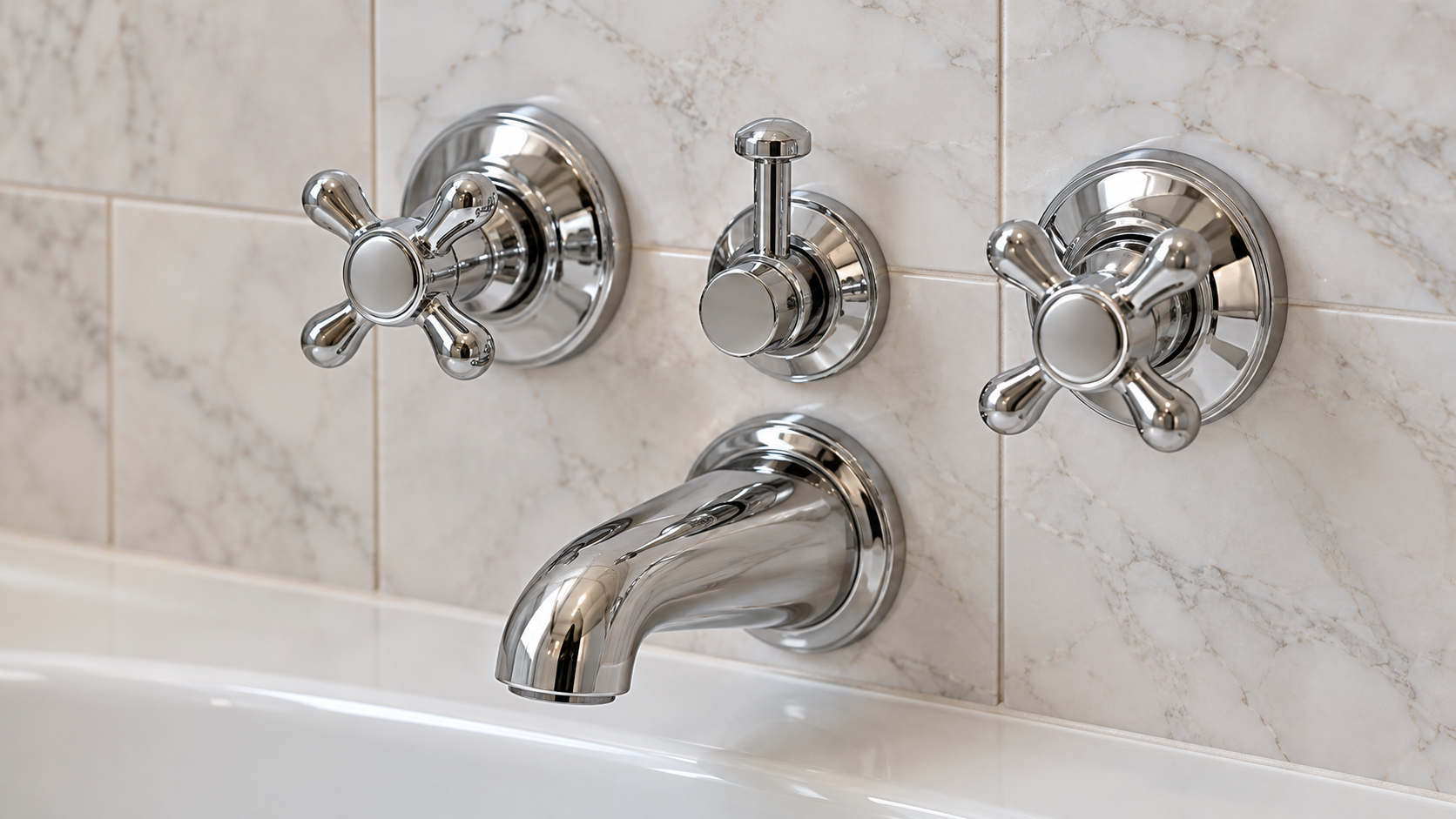
Bathtub knobs are the handles that control hot and cold water on a two-handle tub valve. Most people searching for bathtub knobs want to know how the handles attach, how to remove and reinstall one, or why the temperature shifts. The sources below cover the first two in general terms and the third at the level of a plumbing standard. They do not cover knob styles or brand fit. Shut off the water before removing any handle, and send valve, tempering, or wall work to a licensed plumber.
Quick answer
- On a two-handle tub valve, each knob or lever handle is attached to a valve stem or cartridge. The Glacier Bay guide describes removing the screws and handles to reach the valve.
- Shut off the water supply before removing any handle. Both the Glacier Bay and LF, LLC manuals say to shut off water first.
- The IAPMO guideline says temperature control devices are used with a mixing valve or two handle valve set to reduce mixed water temperature changes caused by pressure swings.
- If a handle will not stop water flow, the Glacier Bay guide lists a dirty or broken cartridge as a possible cause.
- The sources do not give torque values, pressure ratings for knobs, or a way to confirm that a replacement knob fits a given valve.
How we chose
This post uses three non-Amazon sources. Each was opened as a saved copy and checked for the exact sentences quoted below. The IAPMO document is a standards-industry reference guide. The Glacier Bay document is a manufacturer installation and care guide for a two-handle roman tub faucet. The LF, LLC document is a manufacturer manual for a two-handle tub faucet sold under the Project Source name. Retail product pages and blog guides were not used as sources. Each point below says whether it rests on one source, two, or three.
The three publishers are different organizations, so the core points about two-handle tub valves and water shutoff have more than one source behind them. Points that appear in only one document are labeled as such. No product was chosen for this post, so no product claims are made.
What a bathtub knob is in these sources
The Glacier Bay guide describes a two-handle roman tub faucet with separate hot and cold handles, a spout assembly, and a diverter handle. The guide lists a handle (G), a screw (F), a cartridge stem (1), and valve bodies for hot and cold. Each handle is placed onto a cartridge stem and held with a screw. Based on this one source, the knob is the part you turn and the cartridge is the part that controls flow. The guide does not describe other valve types.
The LF, LLC manual lists its package contents as a faucet spout, a left handle assembly, and a right handle assembly, along with a hose. Its parts list gives the left handle assembly as one item and the right handle assembly as a second item. This is a single-source point about this one model. It does not establish how every tub valve is built.
The IAPMO guideline is about temperature control devices, not handles. It describes a reference guide for plumbers and installers. Its relevant sentence says a temperature control device minimizes mixed water temperature variations due to pressure fluctuations when it is used in conjunction with a mixing valve or two handle valve set. This is the only source here that speaks to how the handles and the mixing function relate to temperature. It is a standards document, not an installation guide for a particular knob.
Before you touch a knob: shut off the water
Every source that gives steps starts with the water. The Glacier Bay guide says “Always turn off the water supply before” starting work on the faucet, and its step list includes “Shut off the water supply.” The LF, LLC manual says “Shut off the water at the main water supply” before it removes the existing tub faucet valve assembly. These two sources agree, so the shutoff point rests on two independent publishers.
The LF, LLC manual also says “Cover the bathtub drain to avoid losing parts.” This is a single-source point, but it is a sensible step for any handle or screw removal. Small screws and handle caps are easy to lose into a drain.
Before the leak check, the Glacier Bay guide says to “Ensure the faucet handles are in the off position,” then turn on the water supply. This is one-source guidance for the Glacier Bay model.
Shutting off water at the main valve is different from shutting off a tub valve. The sources do not say whether a tub valve has its own shutoff. If the house has no main shutoff you can reach, or if the valve is not behaving as the manual describes, the work belongs to a licensed plumber.
Removing and reinstalling a handle, as the manufacturer sources describe it
The Glacier Bay guide gives a sequence for handle work. The first step after shutoff is to open the faucet handle to relieve water pressure. The guide says “Open the faucet handle to relieve water pressure and ensure that the water is completely shut off.” This is a single-source step for the Glacier Bay model. Opening a handle after shutoff is a way to check whether water is still in the lines. It does not replace shutting off the supply.
Next, the guide says to “Loosen the screws (F) and remove the handles (G).” The screw that holds the handle is the one to back out. The guide does not give a torque value for the screw, and none should be assumed from other products.
To reinstall, the guide says to “Place the handle (G) onto the cartridge stem (1) and tighten with the screw (F).” It then repeats the process for the second handle. The guide places the handle on the cartridge stem, so the handle and the valve cartridge connect at that point. The guide does not give a numeric force for the screw.
After reassembly, the Glacier Bay guide says to “Turn on the hot and cold handles to allow the water to run for at least one minute” and to check for leaks. Before turning on the supply, the guide tells the installer to make sure the handles are off. This check step comes from the manufacturer’s own guide.
The LF, LLC manual covers a different model, so its steps are not the same. Its guidance on the tub deck is general: it says to “Verify the hole sizes and positions in the tub deck are correct” before installing a faucet. This is a single-source point. It tells the installer to check the deck before assembly, not how to change a knob.
Why the hot and cold side matter for temperature
People often ask why a tub changes temperature when the handles are moved. The IAPMO guideline gives the standards view. It says temperature control devices are used in conjunction with a mixing valve or two handle valve set, and that this minimizes mixed water temperature variations due to pressure fluctuations. In plain terms, a mixing function is meant to keep the blend steadier when the pressure in the hot or cold line changes. A knob alone does not do that job.
The IAPMO document also notes that it is a reference guide for plumbers, installers, maintenance personnel, and inspectors. It is written for trade use. The sources do not say how a homeowner should adjust a mixing valve, and this post does not provide that adjustment.
If the temperature changes sharply during a shower or bath, the sources point toward the valve and the mixing function, not toward the knob’s appearance. A licensed plumber can check the valve, the tempering device, and the supply lines. The sources do not say which valve part to check first, and they do not give a temperature setting.
Troubleshooting a handle that does not shut off
The Glacier Bay guide includes a troubleshooting table. One entry reads “The water will not shut off,” and the listed cause is “The cartridge is dirty or broken.” This is a single-source point. It means a handle that keeps water flowing points toward the cartridge, which is inside the valve. Fixing that cause is valve work, which this post does not cover.
Before any valve work, shut off the water supply again and confirm it is off. If the handle still does not stop the flow after the supply is off, stop and call a licensed plumber. The sources do not describe a way to repair a cartridge in a wall or behind a tub surround, and that work is not covered here.
Practical checklist for a handle job
- Confirm the water supply is off, and check that the handles are in the off position.
- Cover the drain to keep small parts out of it, as the LF, LLC manual advises.
- Remove the screw and handle, keeping track of which handle is hot and which is cold.
- Reinstall the handle on the stem and tighten the screw.
- Turn the water on, run the hot and cold handles for at least one minute, and check for leaks.
- Stop and call a plumber if the valve, a cartridge, or the wall needs work.
The checklist combines steps from the Glacier Bay and LF, LLC documents, plus the plumber referral. Steps that appear in neither source are left out.
Where the links fit
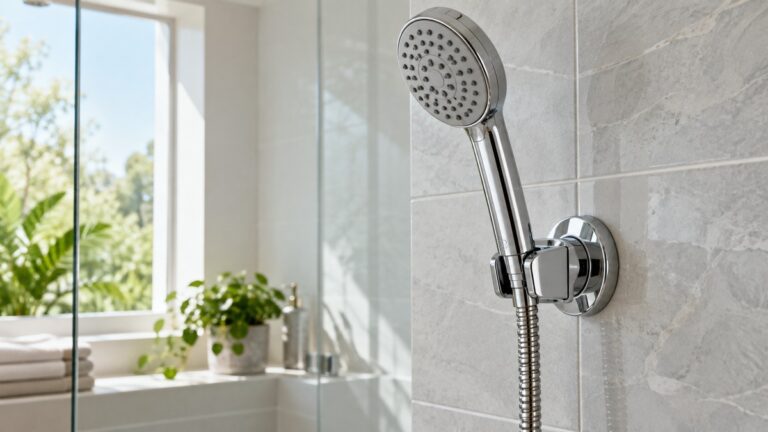
A handle problem can look like a shower head problem. If you are trying to fix water flow at the spout rather than the knob, these related posts on the site may help you sort out the question. hand held shower heads that fit a tub faucet covers the spout side of a tub setup. showerheads for low water pressure covers flow questions that are not about the knob. Neither post replaces the shutoff and valve guidance above.
What we could not verify: what the sources do not say
The sources do not say which knob styles fit which valve brands or model numbers. Fit depends on the valve body, the stem, and the handle interface, and none of the three documents lists compatible handles for another manufacturer’s valve.
The sources give no torque values for handle screws, no pressure ratings for knobs, and no thread sizes for handle connections. This post does not give any of those numbers.
The sources do not describe finishes, corrosion behavior, or how long a knob or cartridge lasts.
The sources do not give a temperature setting, a maximum water temperature, or a scald-prevention limit for a tub. The IAPMO guideline discusses temperature control devices in general, not a specific limit for a home tub.
The sources do not describe how to remove a handle that is stuck, corroded, or has a broken screw head. Those cases need a plumber or the manufacturer’s service path.
The Glacier Bay steps and the LF, LLC steps describe two different models. Some points in this post, such as the troubleshooting cause, rest on one document only. Those points are labeled above.
FAQ
Do I need to shut off the water before changing a bathtub knob?
Yes. The Glacier Bay guide says to always turn off the water supply before working on the faucet, and the LF, LLC manual says to shut off the water at the main supply. Confirm the water is off before you remove a handle.
What holds a tub handle on?
According to the Glacier Bay guide, each handle is held by a screw and placed onto a cartridge stem. Loosen the screw to remove the handle. The sources describe this for their own models only.
What does the IAPMO guideline say about handles and temperature?
The guideline says temperature control devices are used with a mixing valve or two handle valve set to minimize mixed water temperature variations caused by pressure fluctuations. It is a standards reference, not a knob guide.
What should I do if the tub water will not shut off at the handle?
The Glacier Bay troubleshooting table lists a dirty or broken cartridge as the cause. That is valve work. Shut off the supply and call a licensed plumber.
Can I check for leaks after reinstalling a handle?
Yes. The Glacier Bay guide says to turn on the water and check for leaks after installation, and to run the hot and cold handles for at least one minute. Look for drips at the handles and under the deck.
Does this post cover the whole tub valve?
No. It covers the handle and the parts the sources describe. Tempering devices, wall work, and valve replacement belong to a licensed plumber.
Bottom line
A bathtub knob is the handle on a two-handle tub valve. The manufacturer sources agree on the first step, which is to shut off the water before you remove anything. The steps for removing and reinstalling a handle are described in the Glacier Bay guide for its own model. The IAPMO guideline explains why a mixing valve or two handle valve set matters for temperature. If a handle keeps water flowing, or if the valve or wall needs work, stop and call a licensed plumber.
Sources
- IAPMO, Guidelines for Temperature Control Devices (ASSE guideline PDF). https://iapmo.org/media/pbfltxqk/asse_guidelines_for_temp_control_devices.pdf (saved copy checked 2026-10-27)
- Glacier Bay, Two-Handle Roman Tub Faucet Installation and Care Guide, Model HD883X-0004. https://images.homedepot-static.com/catalog/pdfImages/7a/7ae20045-4821-4197-804f-83bd43eb8feb.pdf (saved copy checked 2026-10-27)
- LF, LLC / Project Source, Two-Handle Tub Faucet manual, Model 74-BRT2. https://pdf.lowes.com/productdocuments/1ebe7a0c-f703-4787-b20e-983957544a6d/65157536.pdf (saved copy checked 2026-10-27)